A fly, not a bee
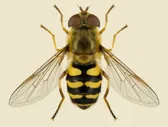
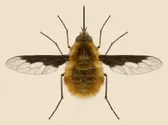
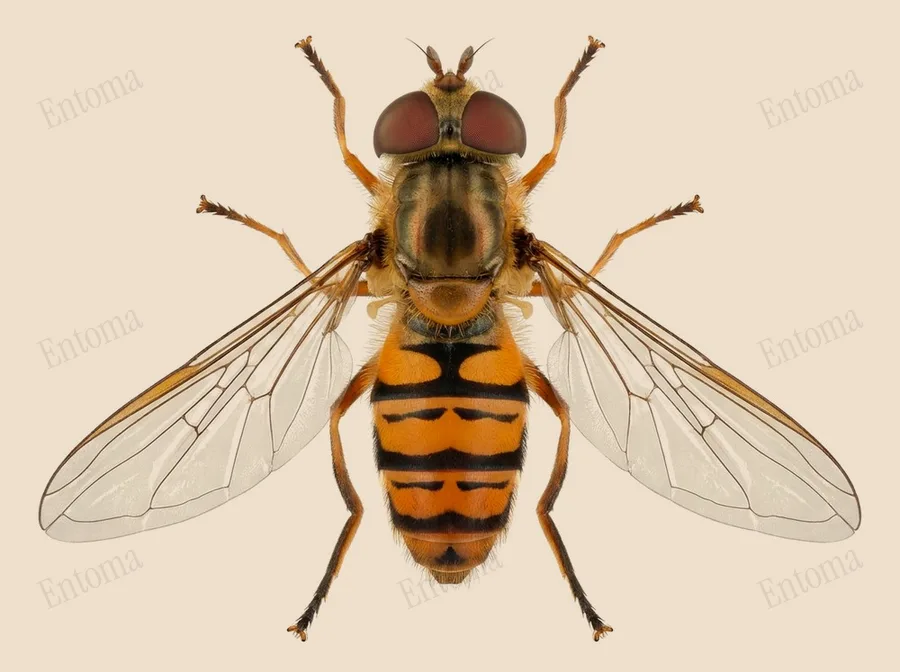
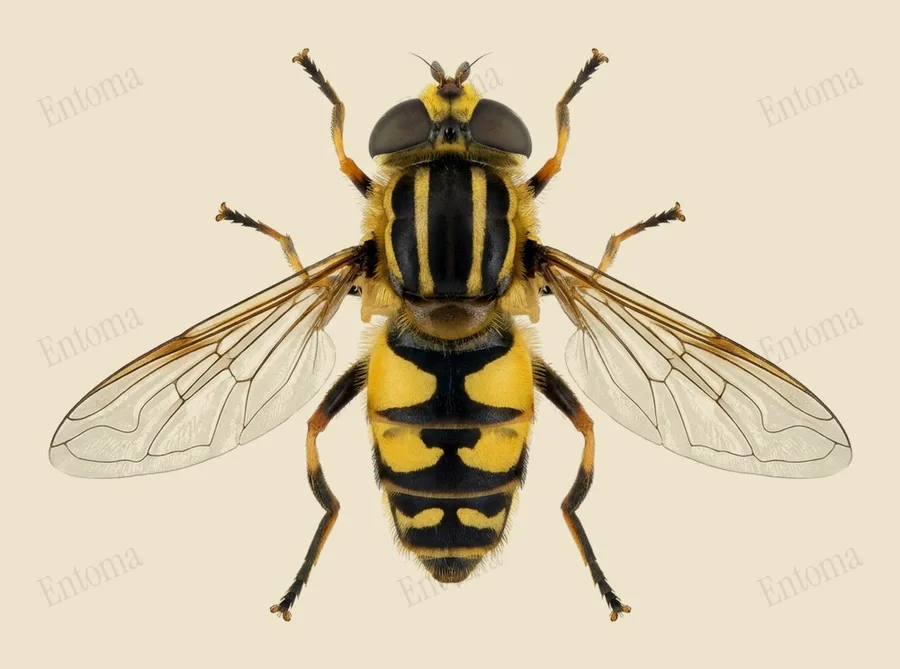
Hoverflies are true flies, order Diptera, family Syrphidae, with a single pair of working wings. Bees and wasps have two pairs. Most hoverflies also have a false vein running nearly parallel with the fourth vein of the wing, which separates nearly all of them from other flies.
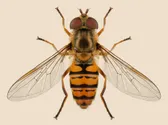
As the name says, they hover in mid air over flowers. A hovering male is often defending a territory, while a hovering female is inspecting places to lay her eggs. In many species, such as the marmalade hover fly, the eyes of the male meet at the top of the head, while those of the female are set clearly apart.
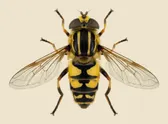
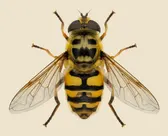
They range from about 4 mm to about 2 cm long, depending on the species. In some, the yellow and black pattern depends on the temperature during pupation.
Drone flies
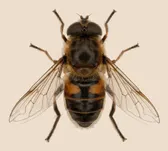
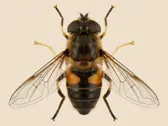
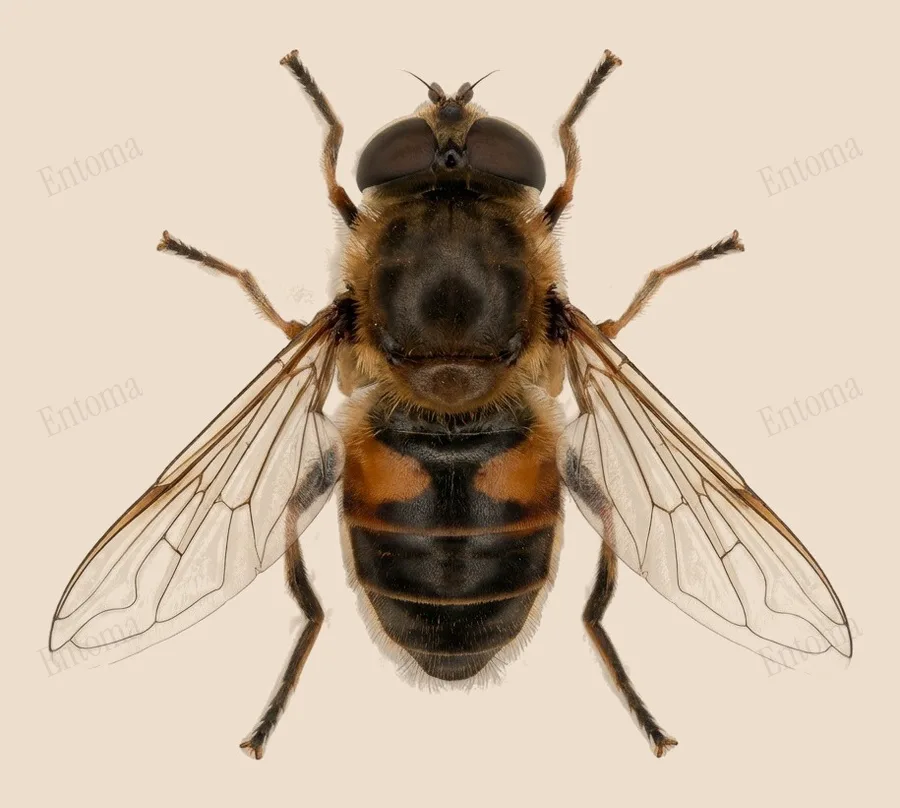
Drone flies look very like honeybees. The common drone fly, Eristalis tenax, is hairy and stout and is named after the male honeybee, the drone.
Its larvae are rat tailed maggots. They live in stagnant, nutrient rich water and breathe through a long tail that can be several times the length of the body.
Hornet mimics
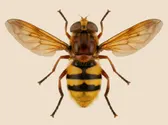
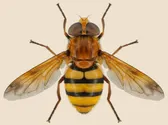
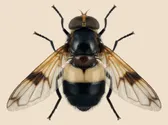
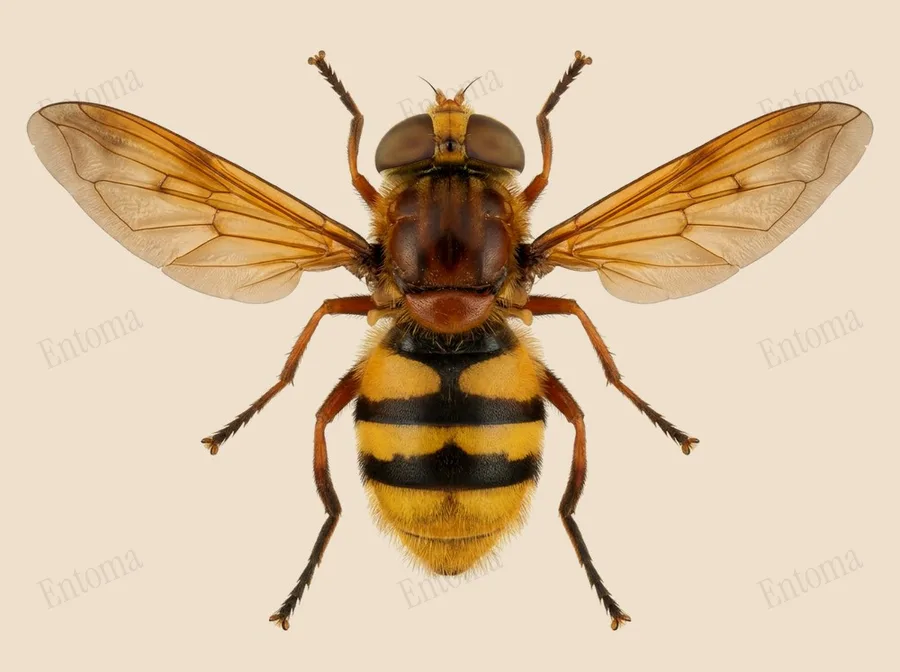
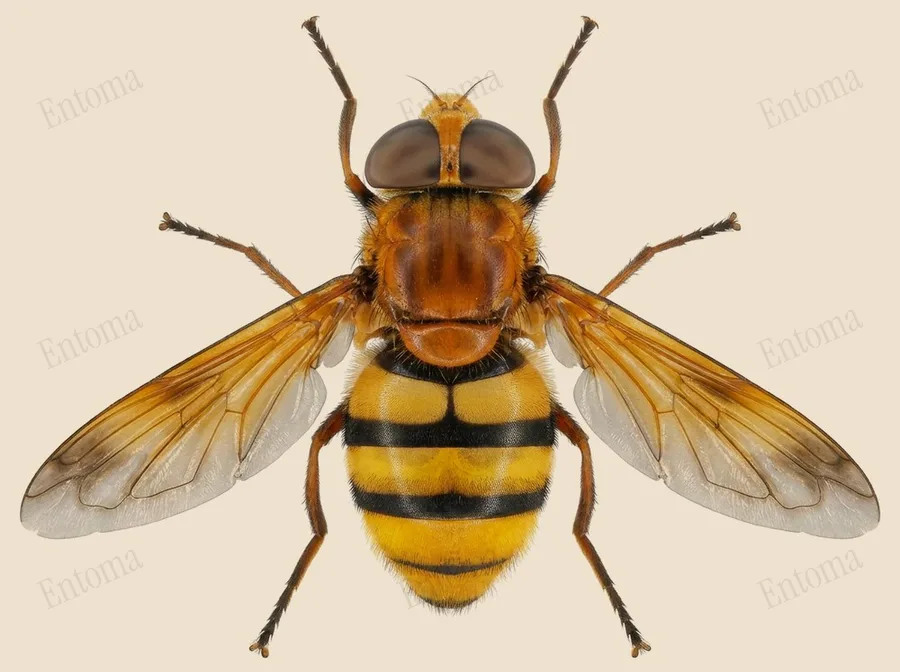
The hornet mimic hover fly, Volucella zonaria, looks like a hornet but is harmless. It is a large hoverfly, about 2 to 2.5 cm long. The larvae of Volucella hoverflies live in the nests of social wasps and bumblebees.
Good for the garden
The larvae of many hoverflies eat aphids and are valued for natural pest control, while others feed on decaying plant and animal matter. The adults feed on nectar and pollen and are useful pollinators of crops and wild flowers.