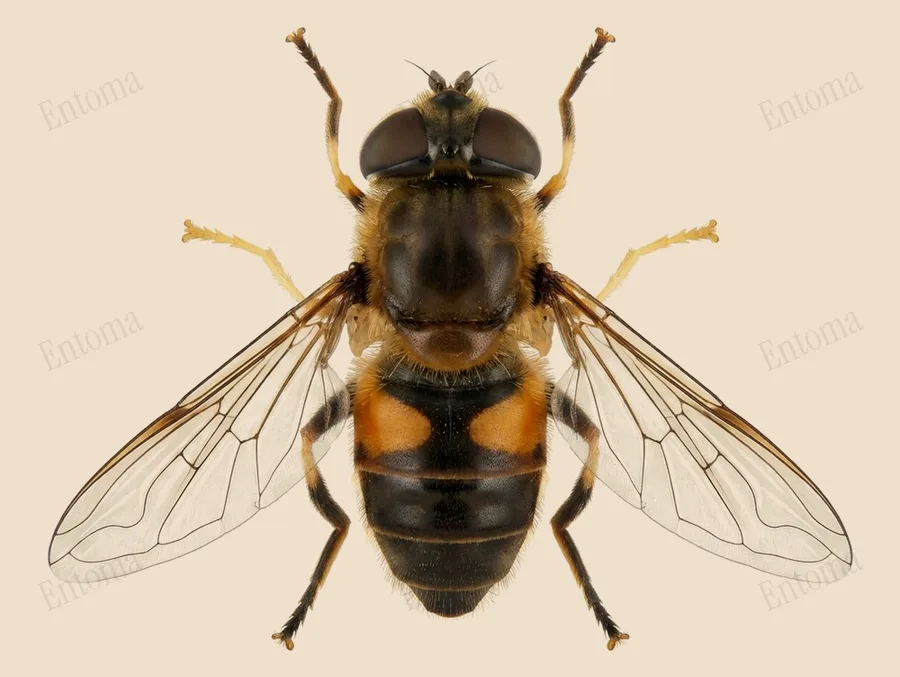
Tapered drone fly
Its name comes from the noticeably tapered, wasp-like abdomen of the male, a bluff used against predators despite the fly having no sting at all.
| Where | Gardens, woodland rides, farmland and wetland edges |
|---|---|
| Size | 10 to 13 mm long |
| When | March to October |
Look for entirely yellow front and middle feet and a pair of orange-yellow spots on the second abdomen segment; males have a pointed, tapered abdomen.
Larvae are aquatic "rat-tailed maggots" that breathe through a long tube while filter-feeding in stagnant, nutrient-rich water such as ditches and manure pools.
Traits
Habitat
Garden
Colour
Brown, Yellow, Black
Active
Day
To people
Harmless; a bee mimic with no sting
Activity through the year
Often confused with
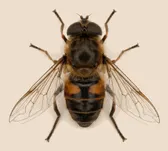
The common drone fly has dark front feet and hairy bands across its eyes, while the tapered drone fly's front and middle feet are fully yellow.
Questions
Is the Tapered drone fly dangerous to people?
Harmless; a bee mimic with no sting.
When can you see the Tapered drone fly?
The Tapered drone fly can be seen from March to October, by day.
Plate retouched from a photo by S. Rae from Scotland, UK, CC BY 2.0, Wikimedia Commons Licence
Report a mistake in this entry
Last updated 2026-09-26. Every entry is checked against published sources.