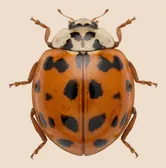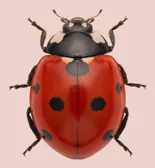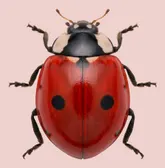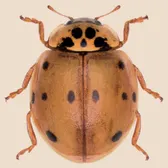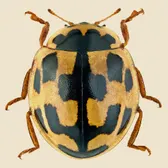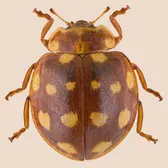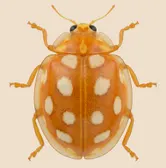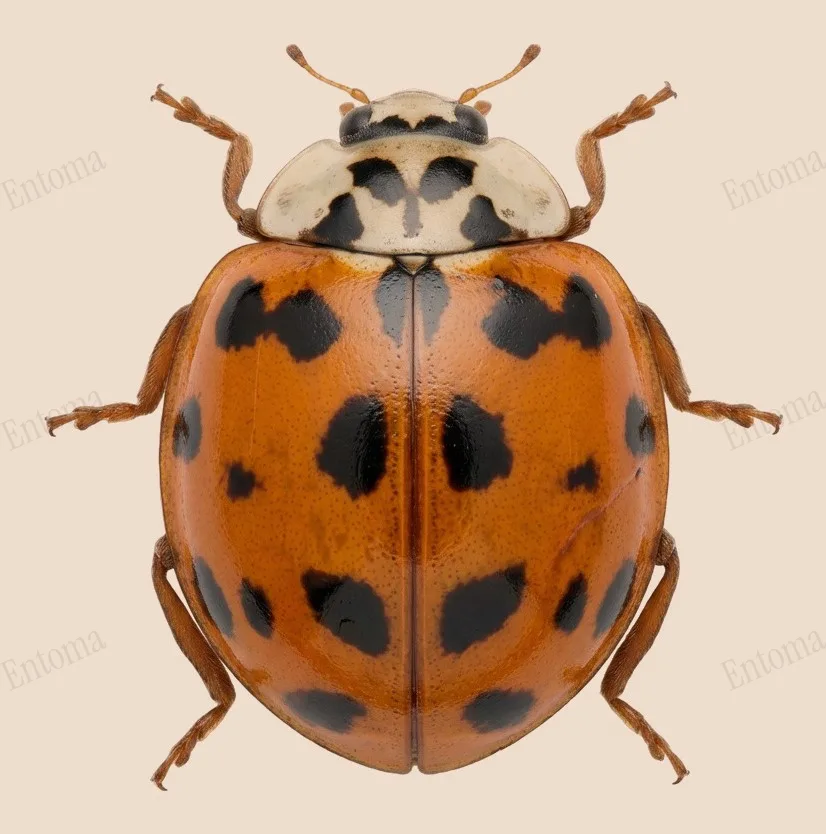
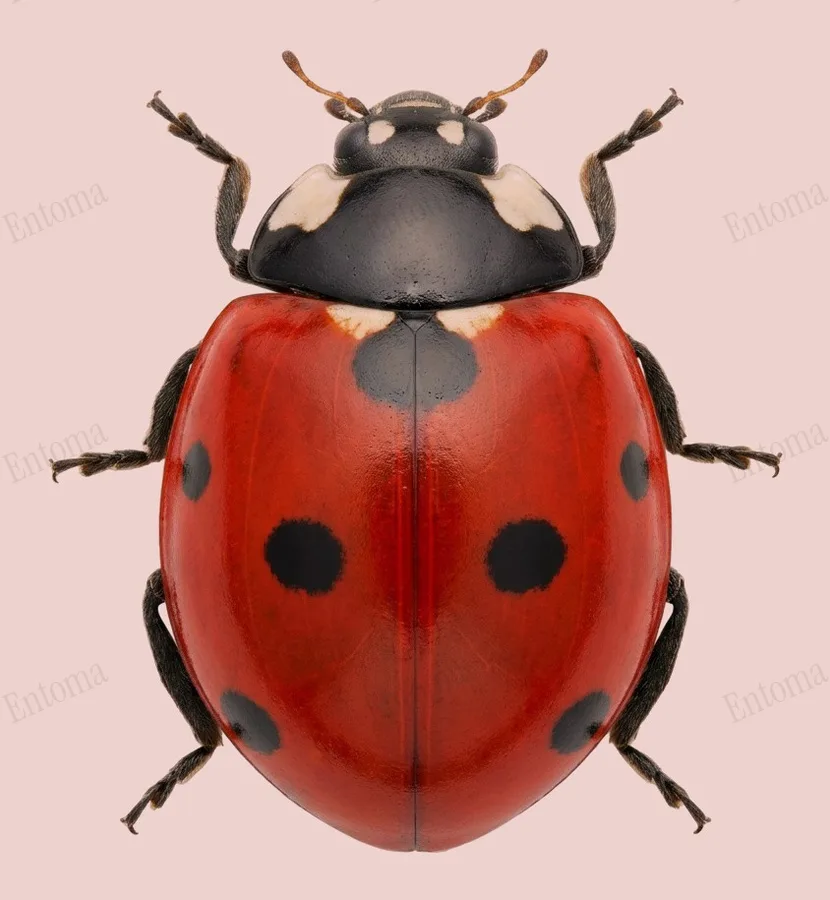
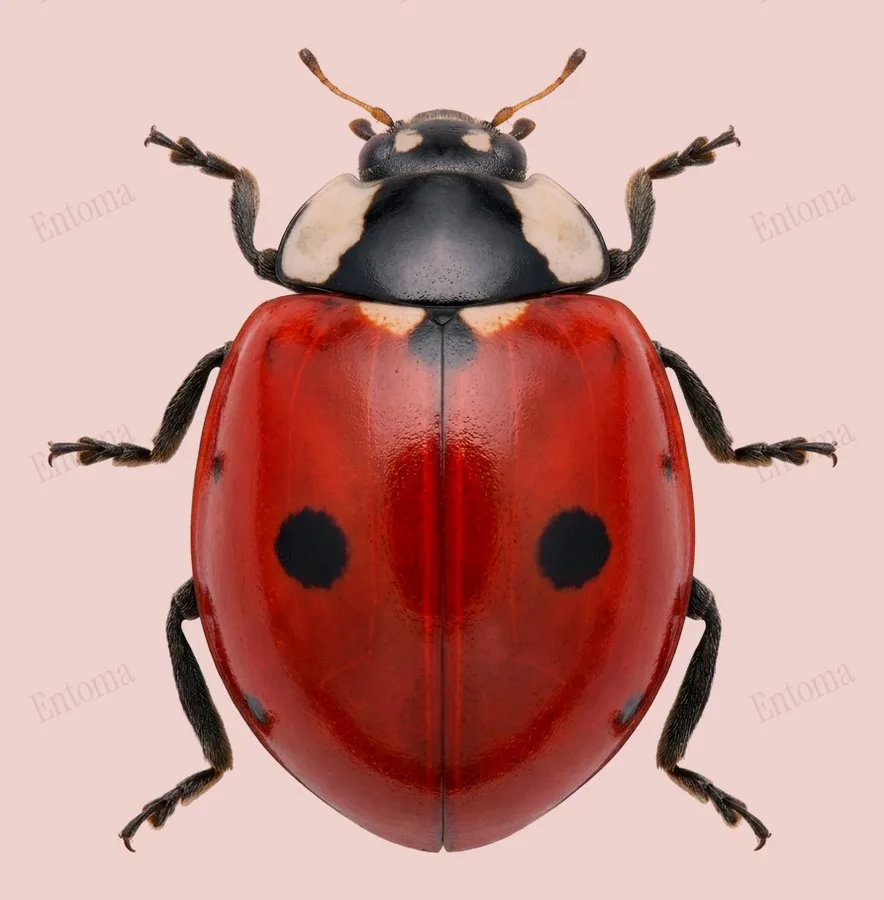
| Harlequin | Seven-spot | |
|---|---|---|
| Length | Typically 7 to 8 mm | About 6 to 8 mm |
| Colour and spots | Yellow, orange, red or black, with no spots to about twenty | Red with exactly seven black spots |
| In winter | Gathers in groups in sheltered places, buildings included | Usually outdoors, in leaf litter and similar shelter |
How to recognise a harlequin
The harlequin ladybird is large and round, typically 7 to 8 mm long. Its legs are almost always brown or reddish brown. Look at the pale shield behind the head, the pronotum: its black markings can join into an M shape.
The wing cases are no help on their own, because harlequins vary enormously. They can be yellow, orange, red or black, with anything from no spots to about twenty. The forms seen most often are orange with many black spots and black with two red spots.
The seven-spot
The seven-spot ladybird is red with exactly seven black spots: three on each wing case and one shared spot at the front, where the two wing cases meet. It is about 6 to 8 mm long, so size alone will not separate it from a harlequin.
Seven-spots are hungry predators of aphids and other small insects. When threatened they release a bitter tasting fluid from their leg joints, which puts predators off.
A black ladybird with red spots
Black with red spots does not always mean harlequin. A black form of the native two-spotted lady beetle, Adalia bipunctata, can carry four or six red spots, so check the legs and the marks behind the head as well.
Ladybirds indoors in winter
Harlequins gather in large groups in autumn to spend the winter somewhere sheltered, and that includes the inside of buildings. Native seven-spots usually spend the winter outdoors instead, in leaf litter and similar sheltered spots, so a cluster of ladybirds in a window frame is most likely to be harlequins.
Do harlequins cause harm?
Harlequins sometimes bite people, which can leave welts, and a few people react allergically to them. Seek medical help if symptoms such as swelling or difficulty breathing develop.
They eat other insects, other ladybirds included. Whether they are the reason some native ladybirds decline is still unclear, as the evidence so far is mixed.