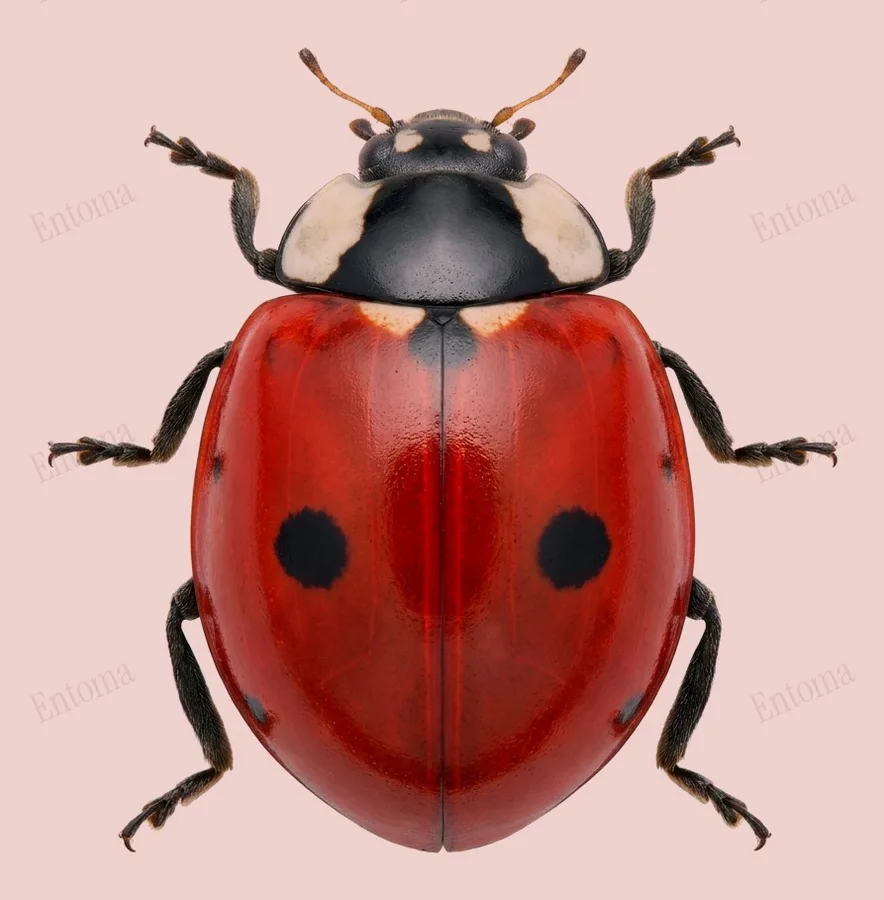
Two-spotted lady beetle
The same species can be either bright red with two black spots or black with four or six red spots, colour forms so different they were once mistaken for separate species.
| Where | Gardens, hedgerows, woodland, parks |
|---|---|
| Size | 4 to 5 mm long |
| When | March to October |
The common form is red with one round black spot on each wing case, though melanic forms that are black with four or six red spots are also frequent in some populations.
Both adults and larvae hunt aphids on trees, shrubs and garden plants, and the species is widely used as a natural pest-control agent because of its appetite for them.
Traits
Habitat
Garden
Colour
Red, Black
Active
Day
To people
Harmless; used commercially as an aphid predator for biological pest control
Activity through the year
Often confused with
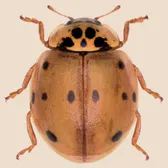
The ten-spot ladybird has a highly variable pattern of up to ten spots and a small ridge near the tip of each wing case that the smoother-tipped two-spot ladybird lacks.
Questions
Is the Two-spotted lady beetle dangerous to people?
Harmless; used commercially as an aphid predator for biological pest control.
When can you see the Two-spotted lady beetle?
The Two-spotted lady beetle can be seen from March to October, by day.
Plate retouched from a photo by Gilles San Martin, CC BY‑SA 2.0, Wikimedia Commons Licence
The plate on this page is shared under the same licence as its source, CC BY-SA.
Report a mistake in this entry
Last updated 2026-09-26. Every entry is checked against published sources.