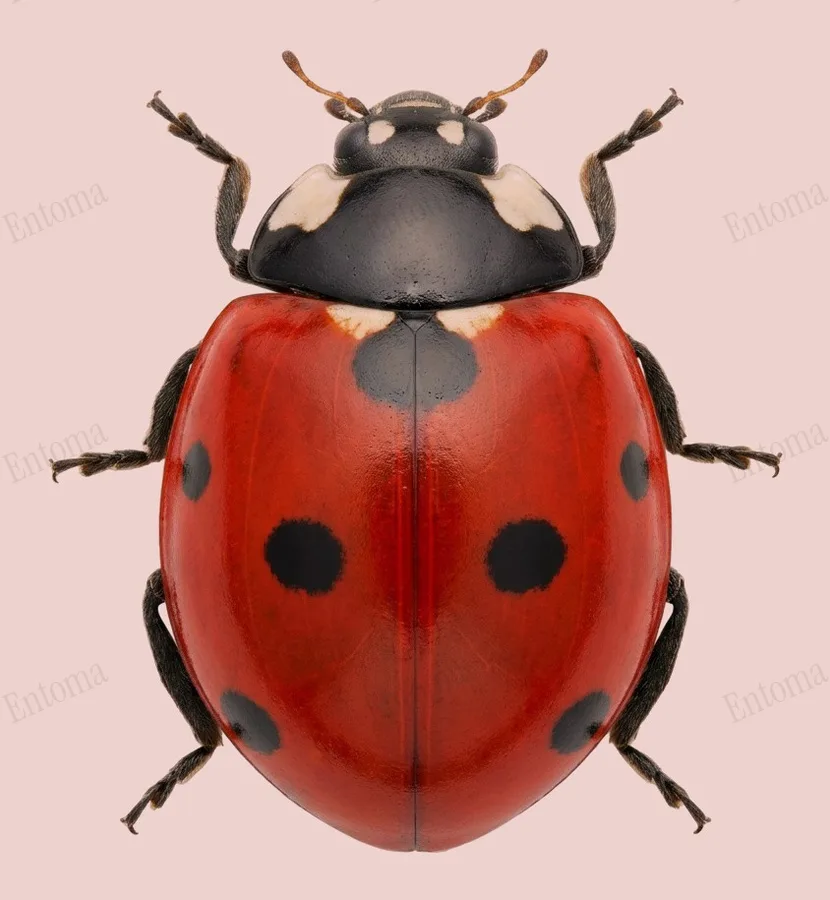
Seven-spot ladybird
Cornered, it bleeds a bitter yellow fluid from its leg joints. A bird that tastes it learns to leave it alone.
| Where | Almost anywhere there are aphids |
|---|---|
| Size | 6 to 8 mm |
| When | February to October |
It eats a great many aphids. That is why gardeners encourage it instead of spraying.
The red and black is not camouflage, it is the opposite, a warning meant to be seen. Winter is spent in clusters under stones and bark.
The red wing cases carry seven black spots, three on each side and one shared at the join. Females lay yellow eggs in clusters on leaves in summer, and the larvae pass through four stages before pupating. Seven-spot ladybirds are used as biological control against aphids.
Traits
Habitat
Garden
Colour
Red, Black
Active
Day
To people
Harmless; its yellow fluid can stain skin
Activity through the year
Often confused with
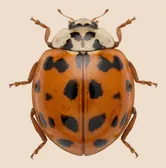
The harlequin varies in colour and spot count, and its legs are usually brown.
Read more in the guides
Harlequin ladybird or a native one?Questions
Is the Seven-spot ladybird dangerous to people?
Harmless; its yellow fluid can stain skin.
When can you see the Seven-spot ladybird?
The Seven-spot ladybird can be seen from February to October, by day.
Sources en.wikipedia.orgbuglife.org.uk
Plate retouched from a photo by Casey H. Richart, CC BY 4.0, iNaturalist Licence
Report a mistake in this entry
Last updated 2026-10-17. Every entry is checked against published sources.