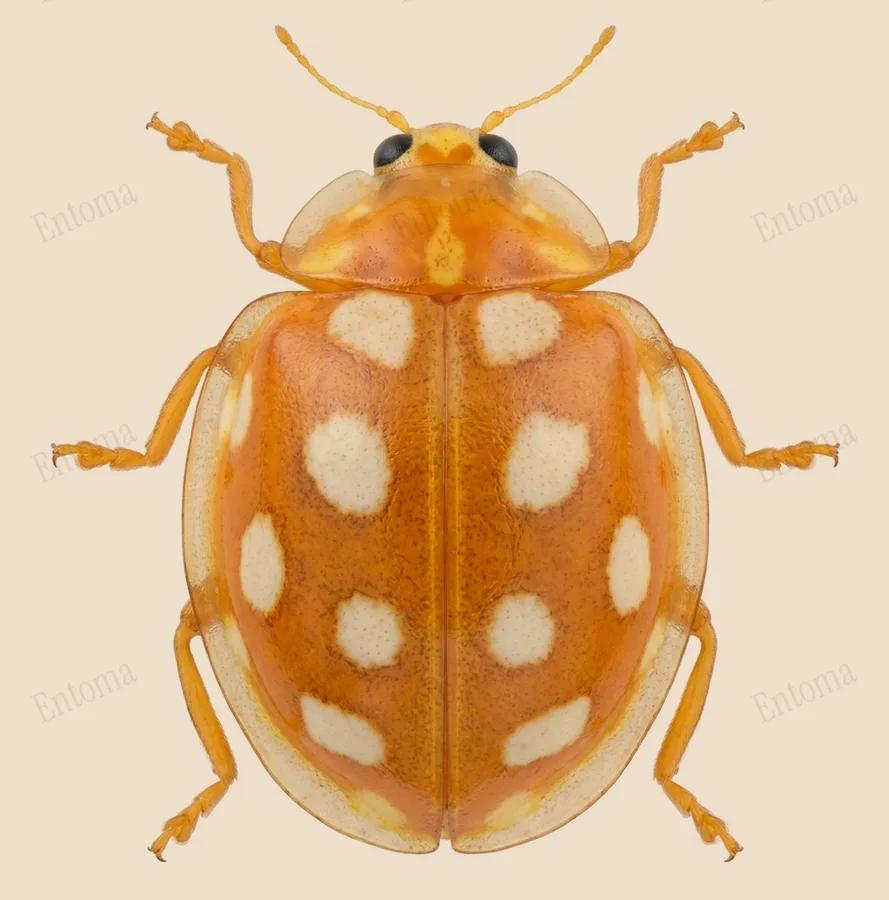
Orange ladybird
Unlike most ladybirds, which hunt aphids, this species and its larvae graze mainly on the powdery mildew growing on tree leaves.
| Where | Woodland canopy, especially sycamore |
|---|---|
| Size | 5 to 6 mm long |
| When | January to December |
This is a pale orange ladybird with 14 to 16 small cream spots and noticeably see-through edges to its wing cases, along with yellow legs and light brown antennae.
Adults and larvae feed mainly on mildew fungus growing on leaves, especially sycamore and ash, rather than on aphids like most other ladybirds. It hibernates over winter under loose bark or in leaf litter on the woodland floor.
Traits
Habitat
Woodland
Colour
Orange, White, Yellow
Active
Day
To people
Harmless; does not bite or sting
Activity through the year
Often confused with
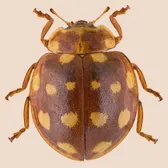
The cream-spot ladybird is smaller, at about 4 to 5.5 mm, and darker brownish-orange, without the transparent wing-case edges of the orange ladybird.
Questions
Is the Orange ladybird dangerous to people?
Harmless; does not bite or sting.
When can you see the Orange ladybird?
The Orange ladybird can be seen from January to December, by day.
Plate retouched from a photo by Francisco Welter-Schultes, CC0, Wikimedia Commons Licence
Report a mistake in this entry
Last updated 2026-09-26. Every entry is checked against published sources.