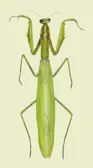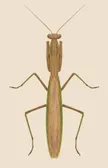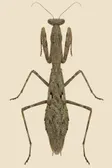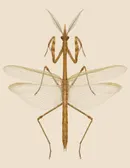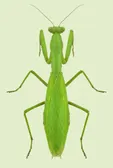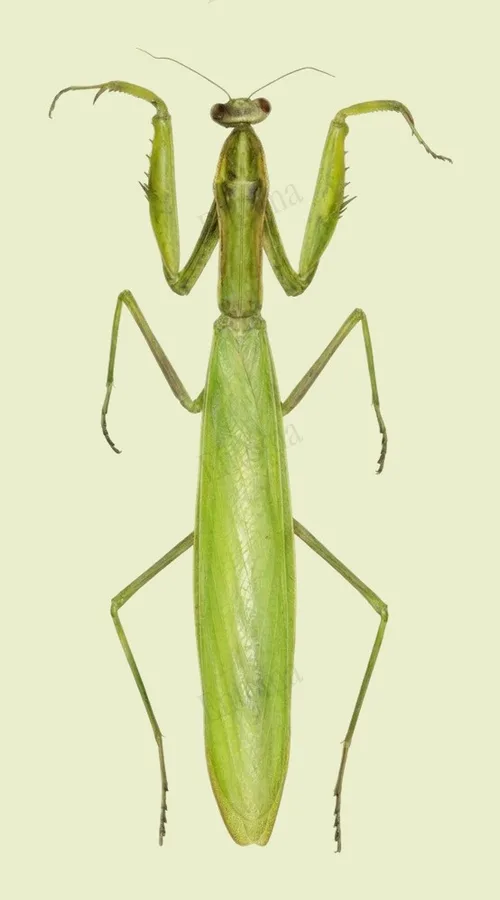
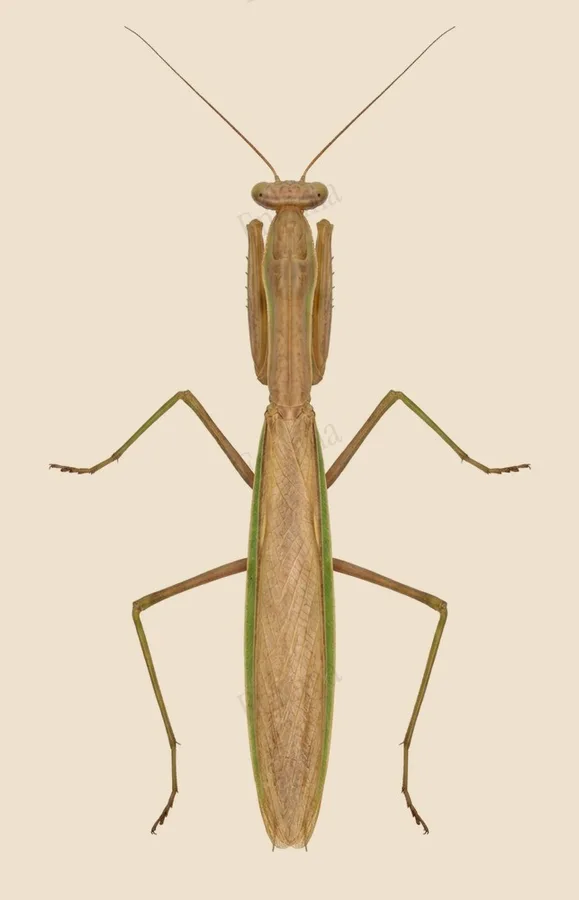
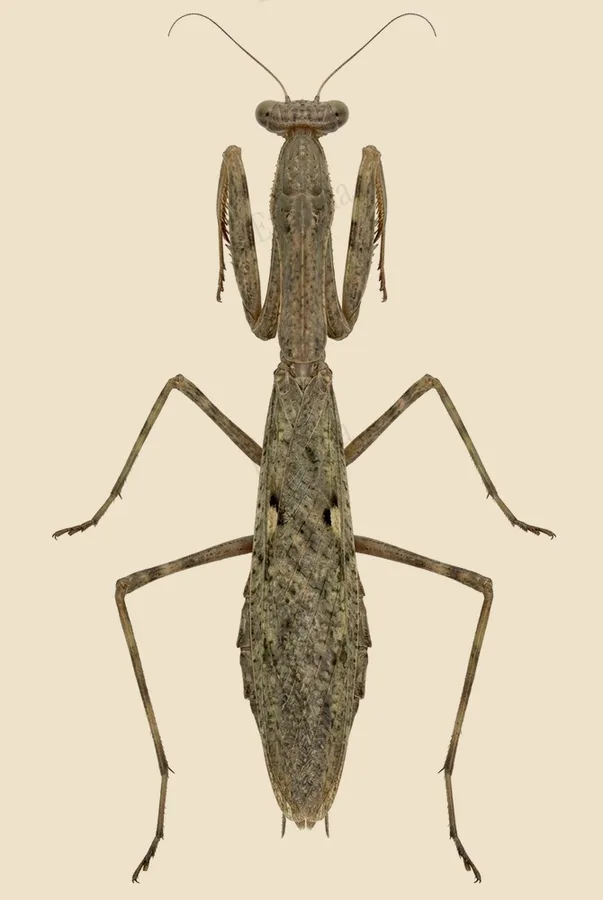
| Mantis | Length | Origin |
|---|---|---|
| Carolina mantis | About 5 to 6 cm | Native to North America |
| European mantis | Up to about 7.5 cm | Native to Europe; introduced to North America around 1900 |
| Chinese mantis | 10 cm or more | Native to Asia; introduced to North America in 1896 |
How a mantis hunts
A mantis waits without moving, camouflaged against its surroundings, then grabs its prey with large spined forelegs. Folded, those forelegs give the praying pose.
Its triangular head can swivel, and some species can turn it nearly 180 degrees to look around. Mantises also have an ear on the underside of the body; in the European mantis it is a single ear in the midline. They can hear high pitched sound, including the ultrasound of hunting bats.
Eggs and a one year life
The female lays her eggs in a frothy mass that hardens into a protective case called an ootheca. Where winters are cold, the adults die, the eggs survive the winter, and most mantises live for about a year.
Females sometimes eat the male during mating. Much of the evidence comes from captivity, and it appears to happen less often in nature.
Three common mantises
The European mantis grows up to about 7.5 cm long and ranges in colour from tan to bright green. It is native to Europe and was introduced to North America around 1900.
The Chinese mantis is native to Asia and was accidentally introduced to North America in 1896. It grows to 10 cm or more, longer than the other common mantises there.
The Carolina mantis is the native North American one of the three, and the adult is about 5 to 6 cm long. The female has short wings that do not reach the tip of her abdomen, while the male has longer wings and flies more, usually at night.
Mantises and garden pests
Mantises are sold for garden pest control, but they eat almost any insect they can catch, other mantises included, so they are not a targeted pest control.