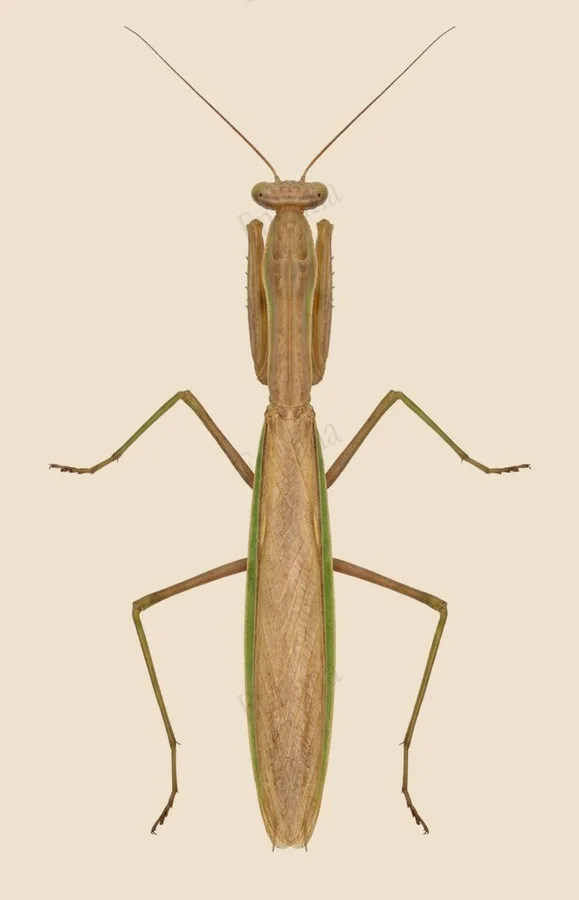
Chinese mantis
Large adult females occasionally ambush and eat hummingbirds visiting flowers or feeders, one of the few insects documented preying on birds.
| Where | Tall grass, gardens and roadsides |
|---|---|
| Size | 80 to 105 mm body length |
| When | February to November |
The Chinese mantis is a large, slender insect with a triangular head that swivels to track movement, spiny front legs held ready to grab prey, and long wings that reach the tip of the abdomen. Its body is usually tan or pale green with a thin green stripe along the folded wing edges.
Females lay a single large, foam like egg case on a twig or stem in autumn, and the young hatch the following spring as tiny wingless nymphs that molt several times before reaching full size by late summer. Introduced from Asia over a century ago, it has since spread across much of the United States and southern Canada.
Traits
Habitat
Grassland
Colour
Green, Brown
Active
Day
To people
Often welcomed in gardens as a natural predator of pest insects; not a risk to people, though it may grip fingers if picked up.
Activity through the year
Often confused with
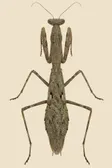
A native mantis usually no more than about 3 inches long, with wings that cover only about two thirds of the abdomen instead of reaching its tip as in the larger Chinese mantis.
Questions
Is the Chinese mantis dangerous to people?
Often welcomed in gardens as a natural predator of pest insects; not a risk to people, though it may grip fingers if picked up.
When can you see the Chinese mantis?
The Chinese mantis can be seen from February to November, by day.
Plate retouched from a museum specimen photo by Dept. of Entomology, Michigan State University, A.J. Cook Arthropod Research Collection, CC0, GBIF Licence
Report a mistake in this entry
Last updated 2026-09-26. Every entry is checked against published sources.