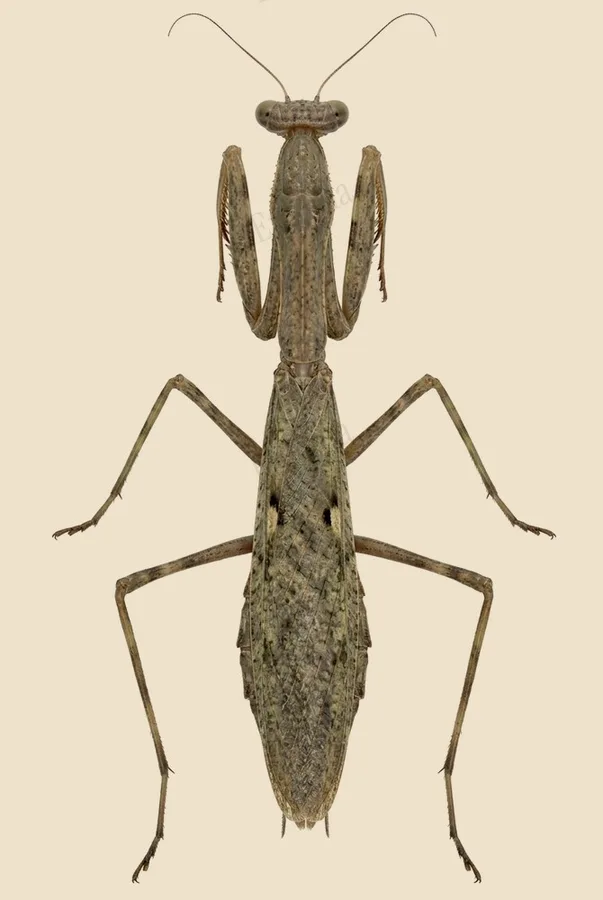
Carolina mantis
Females lay eggs in a papery case that can weigh about a third of her own body weight, protecting them through winter until they hatch in spring.
| Where | Meadows, woodland edges and gardens |
|---|---|
| Size | 40 to 70 mm body length |
| When | June to November |
The Carolina mantis is a medium sized, tan to grey brown mantid with forewings that cover only about two thirds of the abdomen. Females are heavier bodied than the more slender, longer winged males.
It hunts by sitting and waiting near flowers for insect prey, and can detect the high frequency calls of hunting bats. All adults die by winter, and only the egg cases, which females glue to twigs, survive to hatch the following spring.
Traits
Habitat
Grassland
Colour
Brown, Grey
Active
Day and night
To people
Not a risk to people; it may grip a finger with its spiny forelegs if picked up but does not bite or sting.
Activity through the year
Often confused with
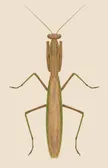
Grows much larger, with wings that reach the tip of the abdomen, while the Carolina mantis is smaller and its wings cover only part of the abdomen.
Questions
Is the Carolina mantis dangerous to people?
Not a risk to people; it may grip a finger with its spiny forelegs if picked up but does not bite or sting.
When can you see the Carolina mantis?
The Carolina mantis can be seen from June to November, by day and at night.
Plate retouched from a museum specimen photo by Davidson College, CC0, GBIF Licence
Report a mistake in this entry
Last updated 2026-09-26. Every entry is checked against published sources.