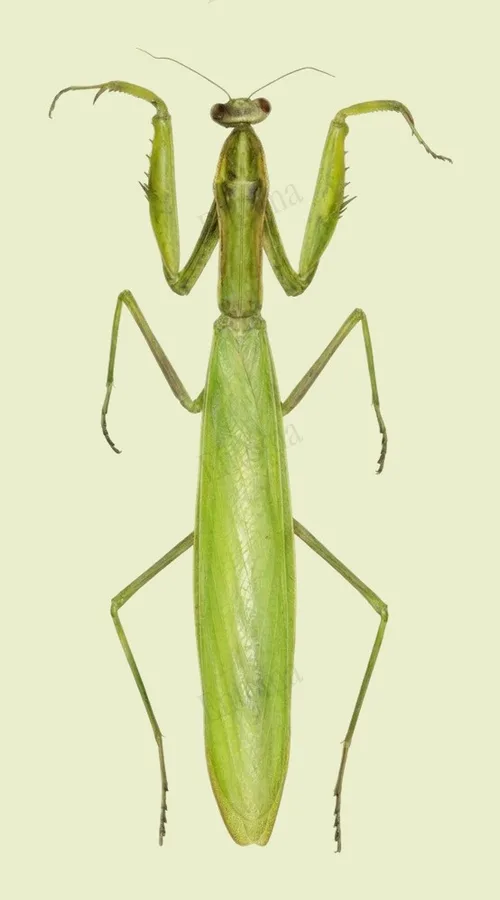
European mantis
It has a single ear, in the middle of its chest. It is tuned to the ultrasound calls of bats.
| Where | Dry grassland, scrub, the untidy edges of gardens |
|---|---|
| Size | 50 to 80 mm, females larger |
| When | June to October |
If it hears a bat while flying at night it breaks its flight and spirals to the ground.
It can turn its head freely on a flexible neck, which is why it seems to look back at you.
A female lays about 100 to 200 eggs in a capsule called an ootheca, and the eggs spend the winter before hatching the next spring. When threatened, the mantis spreads its forelegs to show black, eye-like spots. Its colour ranges from green to brown.
Traits
Habitat
Grassland
Colour
Green, Brown
Active
Day
To people
Harmless; a large one may pinch
Activity through the year
Often confused with
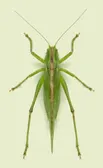
The bush-cricket has long thread-like antennae and jumping hind legs, not grasping forelegs.
Read more in the guides
Praying mantisesQuestions
Is the European mantis dangerous to people?
Harmless; a large one may pinch.
When can you see the European mantis?
The European mantis can be seen from June to October, by day.
Sources en.wikipedia.orgpmc.ncbi.nlm.nih.govdonauauen.at
Plate retouched from a museum specimen photo by Villu Soon, University of Tartu, Natural History Museum and Botanical Garden, CC BY 4.0, GBIF Licence
Report a mistake in this entry
Last updated 2026-10-17. Every entry is checked against published sources.