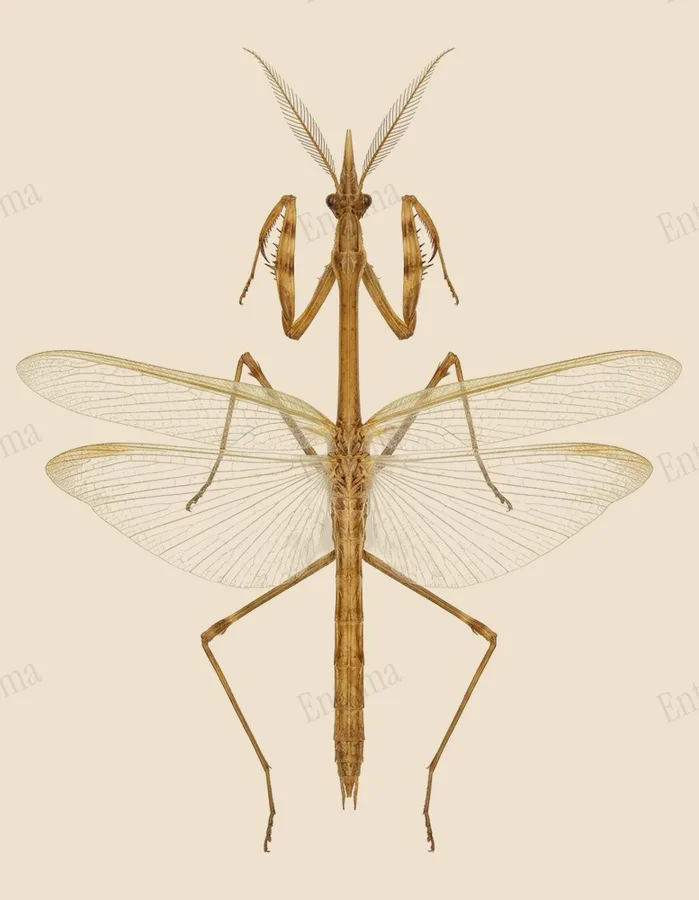
Mediterranean conehead mantis
Both sexes are born with a tall, spike-like crown on the head, and males also grow broad, feather-like antennae to detect a female's scent.
| Where | Dry Mediterranean scrub and herb ground |
|---|---|
| Size | 50 to 100 mm body length |
| When | March to October |
It is a slender, long-legged mantis in shades of green, pink or brown, instantly recognizable by the tall pointed projection rising from the top of its head. Males are smaller and slimmer than females and carry broad, feather-like antennae.
It lives in dry scrub and herb covered ground across the Mediterranean, overwintering as a nymph and reaching adulthood by spring, when females release a pheromone at night to draw in males.
Traits
Habitat
Heath
Colour
Green, Brown
Active
Day and night
To people
Harmless to people; does not bite unless handled
Activity through the year
Often confused with
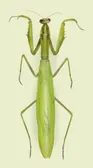
It lacks the tall pointed crown on the head that instantly identifies Empusa pennata, and its males have simple rather than feather-like antennae.
Questions
Is the Mediterranean conehead mantis dangerous to people?
Harmless to people; does not bite unless handled.
When can you see the Mediterranean conehead mantis?
The Mediterranean conehead mantis can be seen from March to October, by day and at night.
Plate retouched from a photo by Tanja Popp, CC BY‑SA 4.0, Wikimedia Commons Licence
The plate on this page is shared under the same licence as its source, CC BY-SA.
Report a mistake in this entry
Mantises›Cone-headed mantises›Empusa
Last updated 2026-09-26. Every entry is checked against published sources.