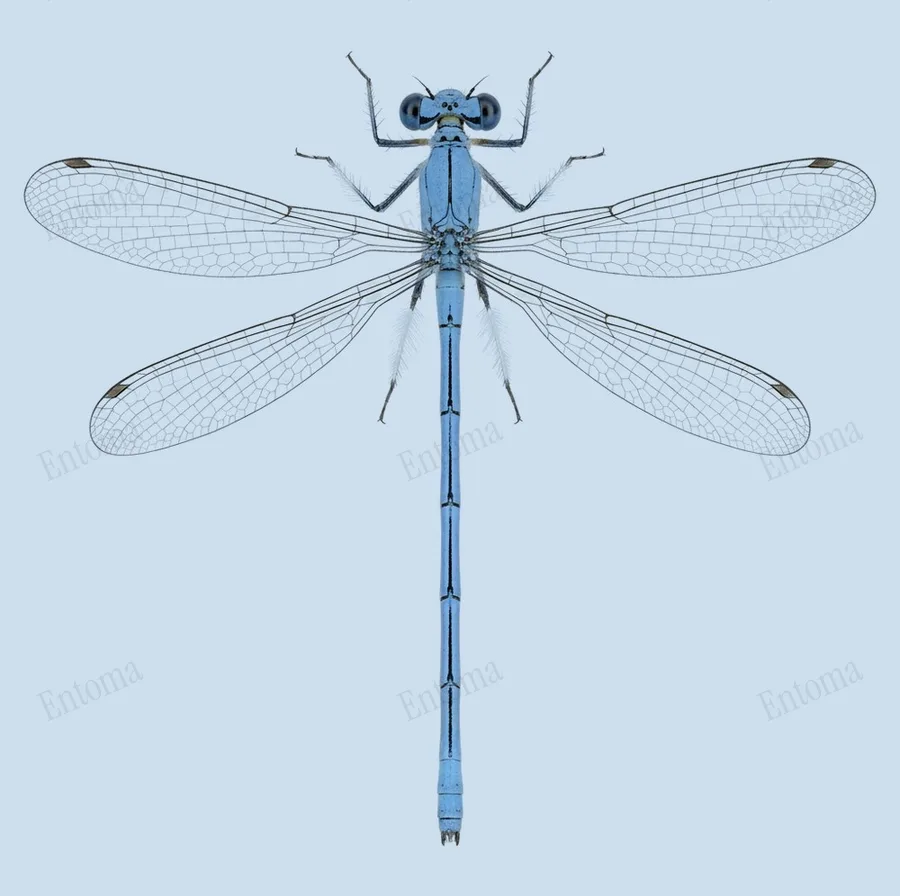
White-legged damselfly
Males show off their broad, flattened white legs to rivals and prospective mates in a fluttering display before pairing.
| Where | Slow, muddy rivers and canals |
|---|---|
| Size | 32 to 37 mm body length |
| When | May to August |
The White-legged damselfly is named for its flattened, white to pale blue tibiae edged with a thin black line, a feature no other European damselfly shares. Males have a pale blue abdomen and greenish thorax, while females are pale yellow-green with black markings.
It breeds in slow, muddy rivers and canals, and males perform a fluttering leg display to rivals and prospective mates before pairing, showing off their broadened, feather-like legs.
Traits
Habitat
Wetland
Colour
White, Blue, Green
Active
Day
To people
Recognized by its flattened white legs; it does not bite or sting people.
Activity through the year
Often confused with
Similar length at about 30 to 35 mm body length, but with an orange-red abdomen and blue eyes rather than the pale legs and blue abdomen of the White-legged damselfly.
Questions
Is the White-legged damselfly dangerous to people?
Recognized by its flattened white legs; it does not bite or sting people.
When can you see the White-legged damselfly?
The White-legged damselfly can be seen from May to August, by day.
Plate retouched from a museum specimen photo by K A J Wise, Auckland War Memorial Museum, CC BY 4.0, GBIF Licence
Report a mistake in this entry
Dragonflies and damselflies›Featherleg damselflies›Platycnemis
Last updated 2026-09-26. Every entry is checked against published sources.