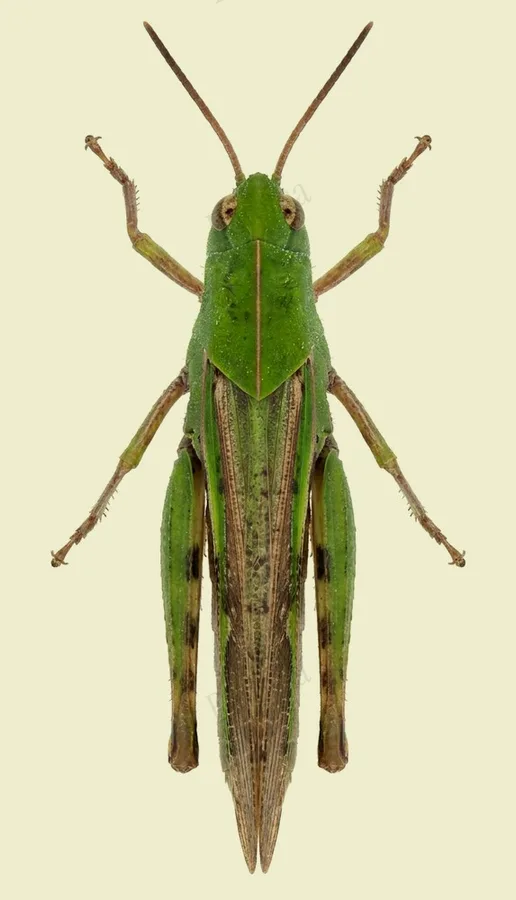
Green-striped grasshopper
The green-striped grasshopper is usually the first grasshopper to appear each spring, and most females are green while most males turn brown.
| Where | Moist grasslands, meadows and roadsides |
|---|---|
| Size | 23 to 38 mm body length |
| When | March to October |
The green-striped grasshopper occurs in a green form and a brown form, with a pale stripe running along the front edge of the folded wings and smoky tips on the hind wings. Most females appear green while most males are brown, and southern populations tend to show bolder, darker markings.
Nymphs overwinter nearly full grown and mature into adults very early in spring, making this often the first grasshopper seen each year. Adults and nymphs feed on grasses and low plants in moist meadows, roadsides and pastures.
Traits
Habitat
Grassland
Colour
Green, Brown, Yellow
Active
Day
To people
Feeds on grasses in open fields and does not bite or sting people; harmless to people.
Activity through the year
Often confused with
Young nymphs of the two species look alike, but adult Dusky grasshoppers have distinctly blue hind shins and banded hind wings, while the Green-striped grasshopper's hind shins are bluish grey or reddish with a pale ring.
Questions
Is the Green-striped grasshopper dangerous to people?
Feeds on grasses in open fields and does not bite or sting people; harmless to people.
When can you see the Green-striped grasshopper?
The Green-striped grasshopper can be seen from March to October, by day.
Plate retouched from a photo by Sam Kieschnick, CC BY 4.0, iNaturalist Licence
Report a mistake in this entry
Crickets and grasshoppers›Grasshoppers›Chortophaga
Last updated 2026-09-27. Every entry is checked against published sources.