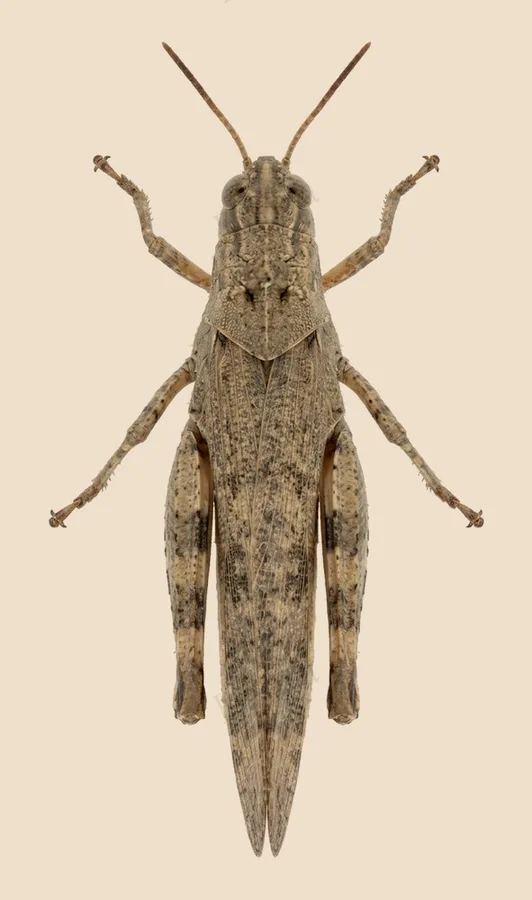
Carolina grasshopper
In flight this grasshopper flashes black hindwings bordered in pale yellow, a wing pattern shared by no other grasshopper species in North America.
| Where | Bare ground, dirt roads and gravel lots |
|---|---|
| Size | 32 to 58 mm body length |
| When | June to October |
The Carolina grasshopper is mottled grey, brown and tan, blending into bare soil, gravel and asphalt at rest. In flight it reveals black hindwings bordered in pale yellow, a pattern shared by no other grasshopper in North America.
Adults favor dusty, open ground such as dirt roads, gravel lots and vacant lots, feeding on grasses and other low plants. Males often crackle or click their wings in flight and drop suddenly back to the ground after a short, erratic burst.
Traits
Habitat
Towns
Colour
Grey, Black, Yellow
Active
Day
To people
Feeds on grasses and low plants; does not bite or sting people.
Activity through the year
Often confused with
Green to olive yellow with clear hindwings and a black herringbone pattern on the hind leg femur, unlike the Carolina grasshopper's black, yellow-bordered hindwings and mottled grey brown body.
Questions
Is the Carolina grasshopper dangerous to people?
Feeds on grasses and low plants; does not bite or sting people.
When can you see the Carolina grasshopper?
The Carolina grasshopper can be seen from June to October, by day.
Plate retouched from a photo by wouterkoch, CC0, iNaturalist Licence
Report a mistake in this entry
Crickets and grasshoppers›Grasshoppers›Dissosteira
Last updated 2026-09-26. Every entry is checked against published sources.