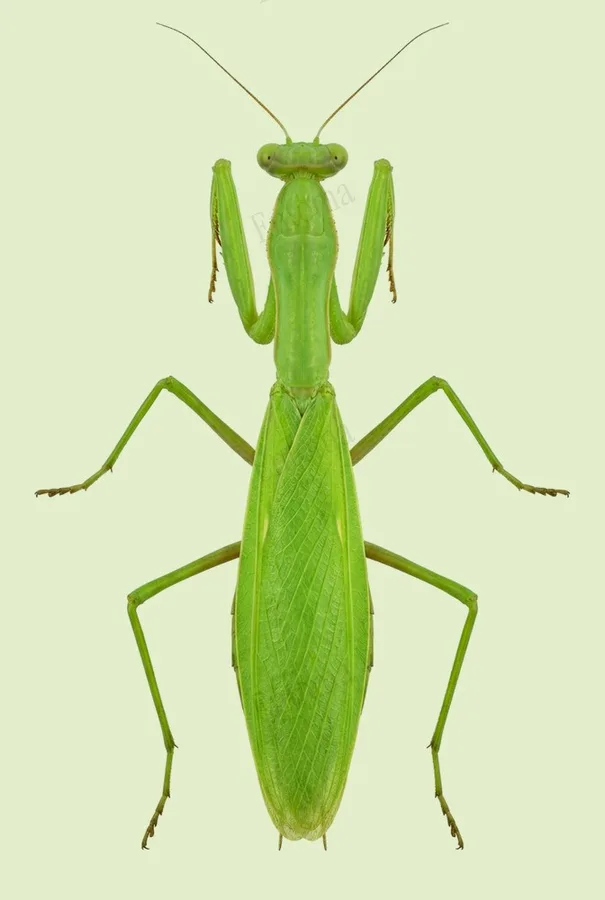
Giant Asian mantis
It lays a single hard, glossy egg case on tree bark that can hold hundreds of eggs until they hatch the following year.
| Where | Grassland edges, hedges and trees |
|---|---|
| Size | 45 to 75 mm body length |
| When | March and May to December |
This mantis can be green or brown and is easy to recognise by its unusually broad abdomen, a pale patch near the tip of each folded forewing, and a small yellow wart at the base of each front leg.
It hunts by ambush from grass, hedges and trees at the edges of forests and parks, seizing crickets, flies and other soft bodied insects with its spined front legs.
Traits
Habitat
Garden
Colour
Green, Brown
Active
Day
To people
Does not sting; if picked up it may grip with its spined front legs but does not target people and usually tries to flee.
Activity through the year
Often confused with
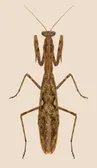
More slender bodied, without the Giant Asian mantis's broad abdomen, pale forewing patch or yellow leg warts.
Questions
Is the Giant Asian mantis dangerous to people?
Does not sting; if picked up it may grip with its spined front legs but does not target people and usually tries to flee.
When can you see the Giant Asian mantis?
The Giant Asian mantis can be seen from March and May to December, by day.
Plate retouched from a museum specimen photo by Natural History Museum, CC0, GBIF Licence
Report a mistake in this entry
Last updated 2026-09-27. Every entry is checked against published sources.