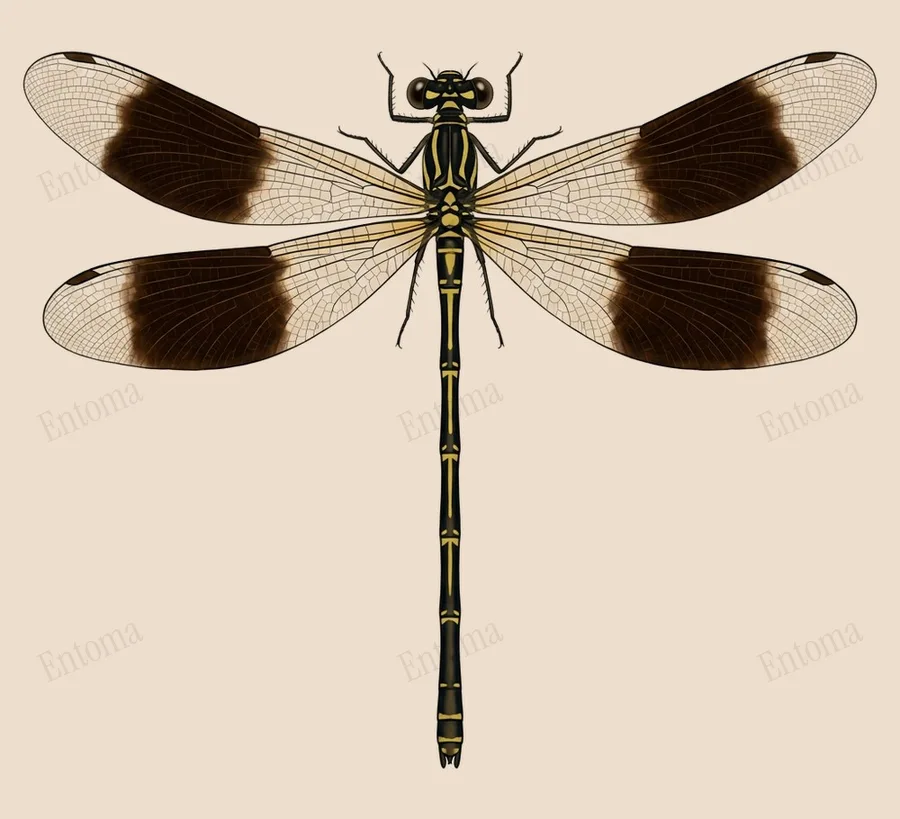
Formosan damselfly
Female Formosan damselflies dive completely underwater to lay their eggs on submerged rocks or waterlogged wood in fast flowing streams.
| Where | Hill streams across Taiwan |
|---|---|
| Size | 39 to 52 mm body length |
| When | April to November |
Males have a black head and thorax with a bright orange red abdomen tipped in black, reddish brown hook shaped marks on the sides of the thorax, and hindwings that are dark brown along most of their length. Females are duller, with a black abdomen marked by a yellow line along each side and mostly transparent wings.
Adults perch on rocks and streamside plants over clear hill streams, and females are unusual among damselflies in submerging fully underwater to lay eggs on rocks or waterlogged wood, a behavior noted as particularly distinctive among Taiwan's damselflies.
Traits
Habitat
Wetland
Colour
Black, Orange, Yellow
Active
Day
To people
Not known to bite or sting; safe to watch from streamside rocks.
Activity through the year
Often confused with
Smaller with narrower fore and hindwings and a small pigmented patch near the forewing tip, unlike this species' clear forewing; found on Japan's Iriomote and Ishigaki islands rather than Taiwan.
Questions
Is the Formosan damselfly dangerous to people?
Not known to bite or sting; safe to watch from streamside rocks.
When can you see the Formosan damselfly?
The Formosan damselfly can be seen from April to November, by day.
Plate retouched from a photo by Yung-Lun Lin, CC BY 4.0, iNaturalist Licence
Report a mistake in this entry
Dragonflies and damselflies›Euphaeidae›Euphaea
Last updated 2026-09-27. Every entry is checked against published sources.