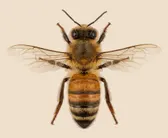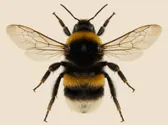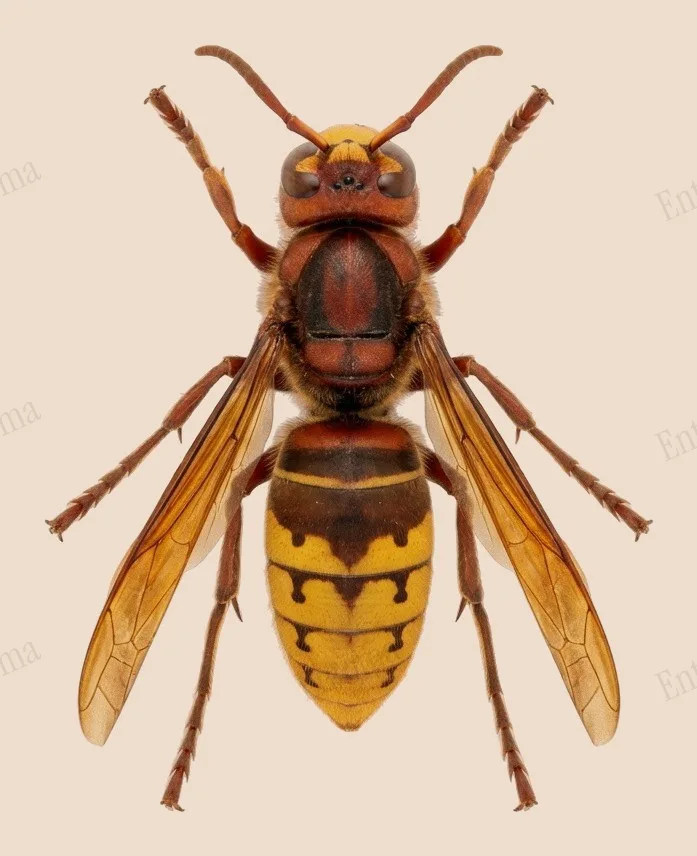
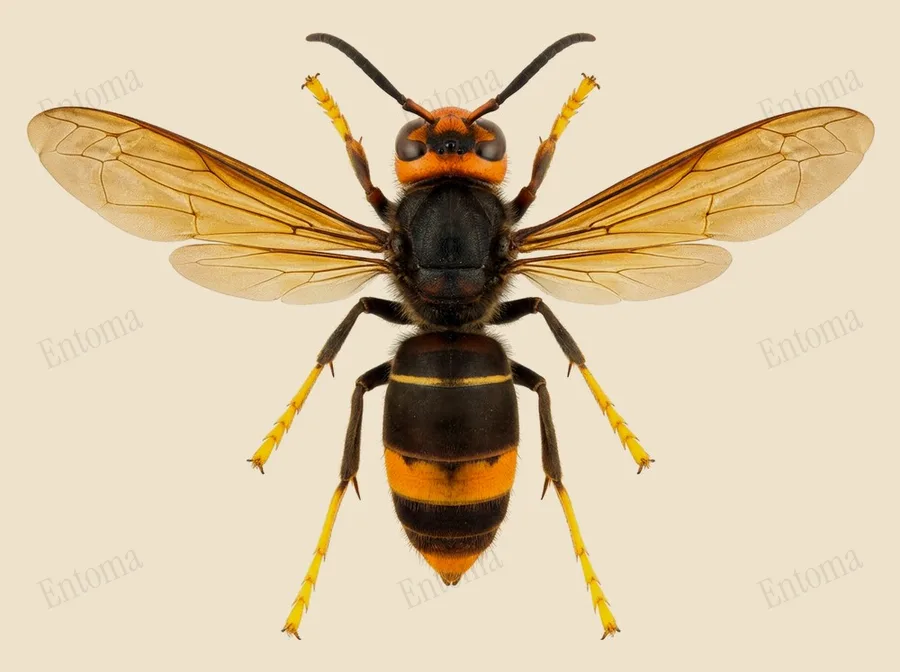
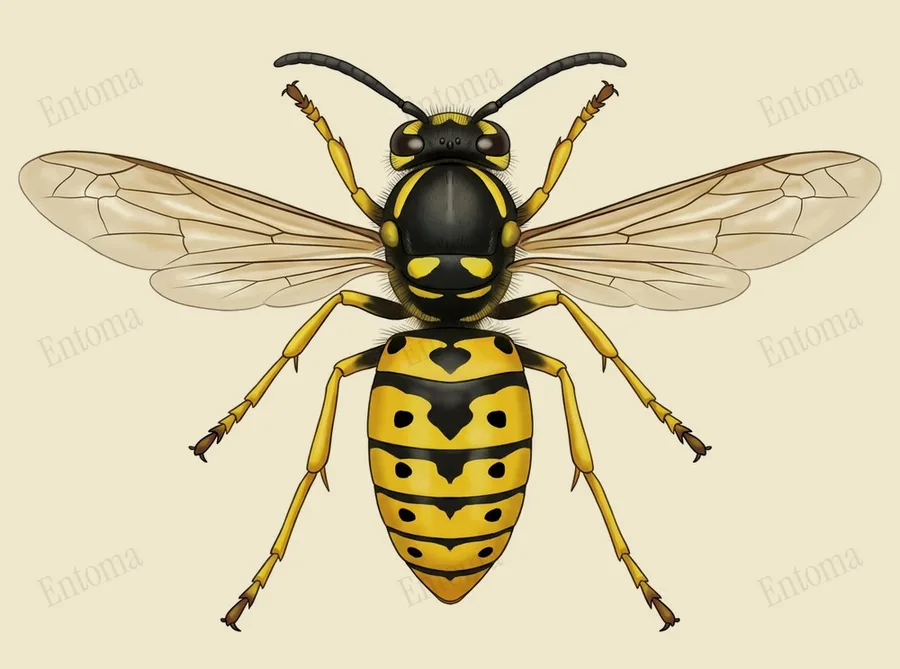
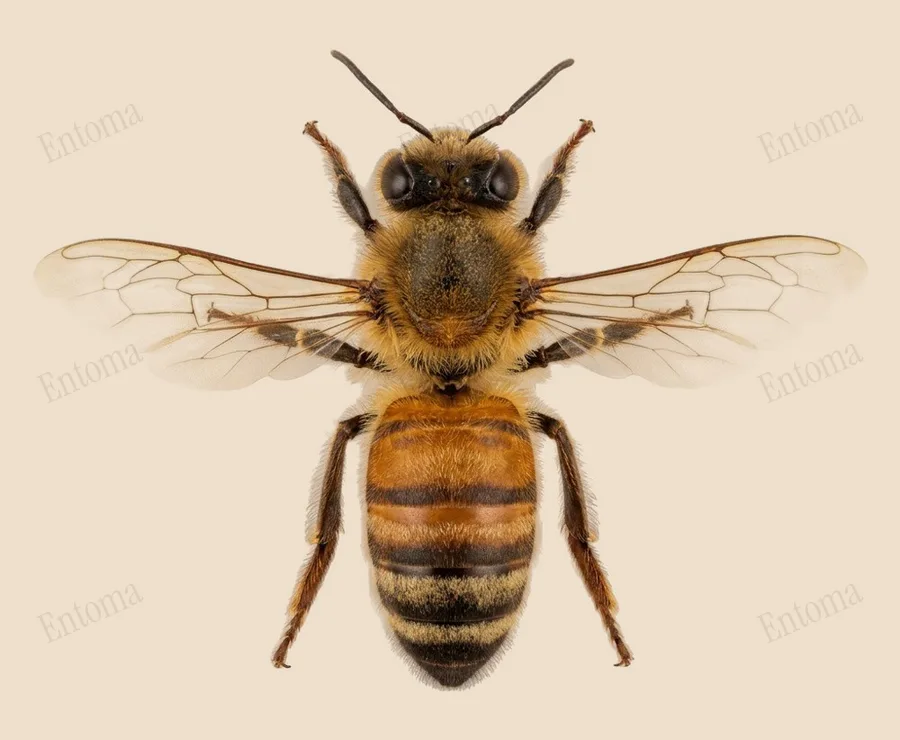
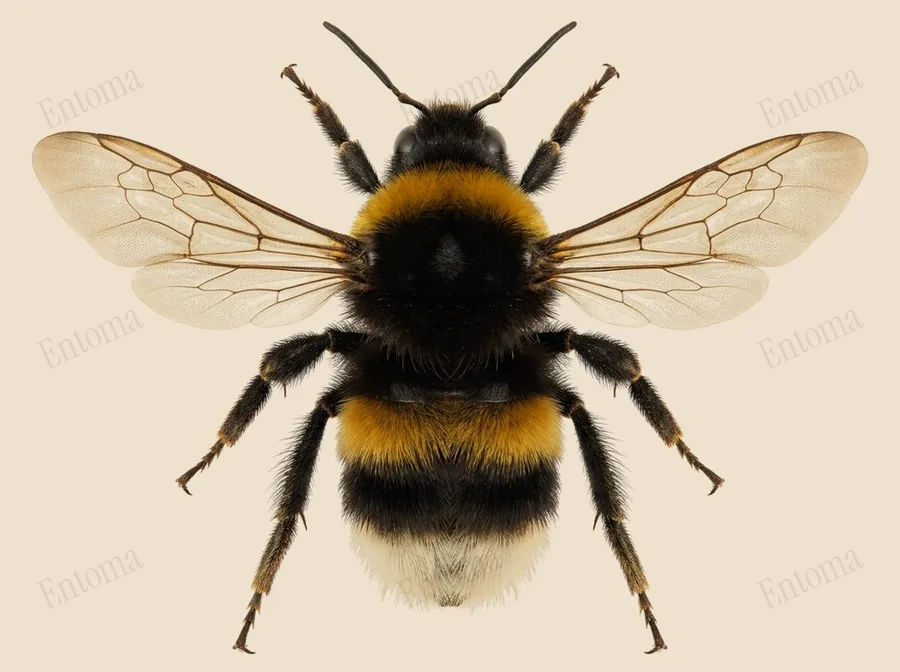
| Insect | How to recognise it |
|---|---|
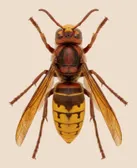
| European hornet | Queens up to about 35 mm, workers 25 to 30 mm. Mostly yellow abdomen with brown markings. Also flies at night |
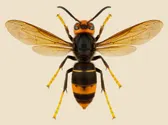
| Yellow-legged hornet | Queens up to about 30 mm. Velvety black thorax, dark abdomen with one yellow orange band, yellow leg tips. Not active at night |
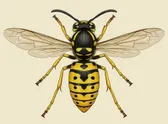
| Common European yellowjacket | 12 to 25 mm. Black with sharp, bright yellow bands and a very short, narrow waist. Comes to food and rubbish |
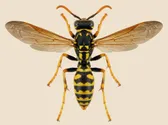
| European paper wasp | Slender, with long legs and a distinctly thin waist |
| Bumblebees | Round body covered in soft hair. Feeds at flowers |
Hornets: the largest of the group
The European hornet is far bigger than the common European yellowjacket. A queen can reach about 35 mm and a worker 25 to 30 mm. Its abdomen is mostly yellow with brown markings, and the thorax carries a lot of brown as well.
It builds its paper nest somewhere dark and out of the way, most often in a hollow tree or an old barn. Unlike most of its relatives it also flies at night, which is why one sometimes knocks against a lit window after dark.
The yellow-legged hornet
The yellow-legged hornet, Vespa velutina, is a little smaller: queens reach about 30 mm and workers about 25 mm. It is much darker than the European hornet, with a velvety black thorax and a dark brown to black abdomen crossed by a single yellow orange band on the fourth segment. The ends of its legs are yellow, which gives it its name.
It is native to Asia and arrived in Europe around 2004. It does not fly at night, so a hornet at a lit window after dark is the European one.
Wasps: yellowjackets and paper wasps
The common European yellowjacket, Vespula vulgaris, and the other yellowjackets measure about 12 to 25 mm. They are black with sharp edged, bright yellow bands, and the waist between thorax and abdomen is very short and narrow. These are the wasps that come to picnic food and rubbish bins.
Paper wasps such as the European paper wasp, Polistes dominula, look more slender, with long legs and a distinctly thin waist.
Bees: round, hairy and busy at flowers
Bumblebees, such as the buff-tailed bumble bee, have round bodies covered in soft hair, which makes them look fuzzy. They feed on nectar and pollen from flowers and do not scavenge on food and rubbish the way yellowjackets do.
Where winters are cold, a bumblebee colony does not last the year. The workers and males die off, and only the new queens survive to start again in spring.
Who stings, and how often
Only females sting, because the stinger is a modified egg laying organ. A male hornet cannot sting at all.
A honeybee such as the western honey bee usually stings only once, while a wasp can sting more than once. Bumblebees can also sting repeatedly, but they generally ignore people and sting only when they sense danger to themselves or their nest.
If one lands on you
Do not swat a wasp or hornet that lands on you. Brush it off gently or blow it away.
A sting from a bee, wasp or hornet usually causes pain and a small swollen lump. Some people react much more strongly. Seek urgent medical help if the lips, mouth or throat swell or breathing becomes difficult.