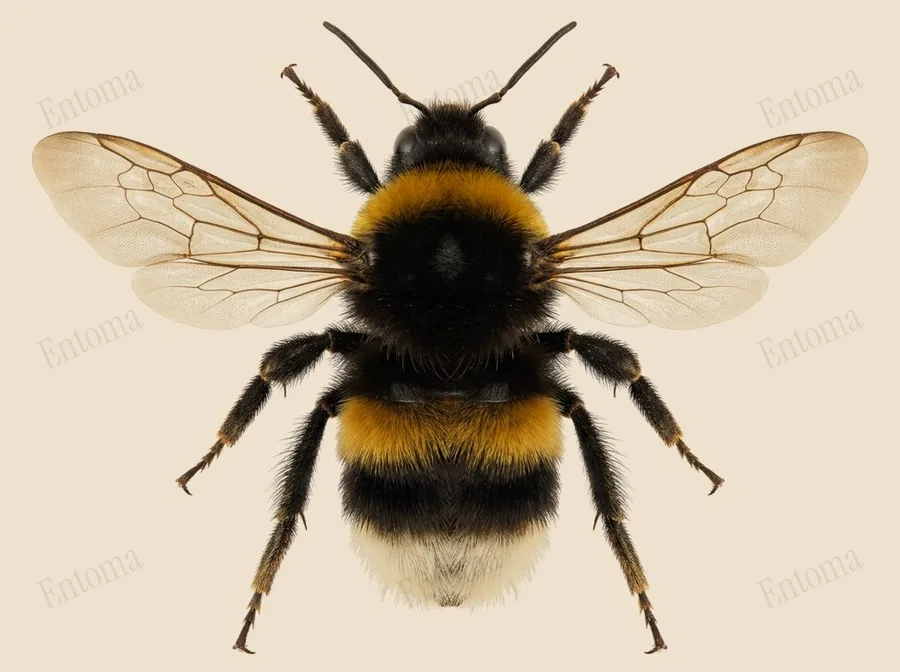
Buff-tailed bumble bee
Its queens are among the first bumblebees to fly each year, sometimes waking on mild days as early as February.
| Where | Gardens, parks, farmland, most lowland habitats |
|---|---|
| Size | 11 to 22 mm body length |
| When | March to September |
A large, dark bumblebee with two dull yellow orange bands and a buff tail in queens, fading to an off-white tail in workers.
Colonies can grow larger than those of most other bumblebees, sometimes holding several hundred workers by midsummer.
Traits
Habitat
Garden
Colour
Black, Yellow, Orange
Active
Day
To people
Mild
Females can sting but rarely do; not aggressive
Activity through the year
Often confused with
White-tailed bumblebee has a bright white tail and cleaner lemon yellow bands, while buff-tailed bumblebee queens show a buff or off-white tail and darker, tawnier yellow bands.
Questions
Is the Buff-tailed bumble bee dangerous to people?
Mild. Females can sting but rarely do; not aggressive.
When can you see the Buff-tailed bumble bee?
The Buff-tailed bumble bee can be seen from March to September, by day.
Plate retouched from a photo by Björn S..., CC BY‑SA 2.0, Wikimedia Commons Licence
The plate on this page is shared under the same licence as its source, CC BY-SA.
Report a mistake in this entry
Bees, wasps and ants›Bees and bumblebees›Bombus
Last updated 2026-09-26. Every entry is checked against published sources.