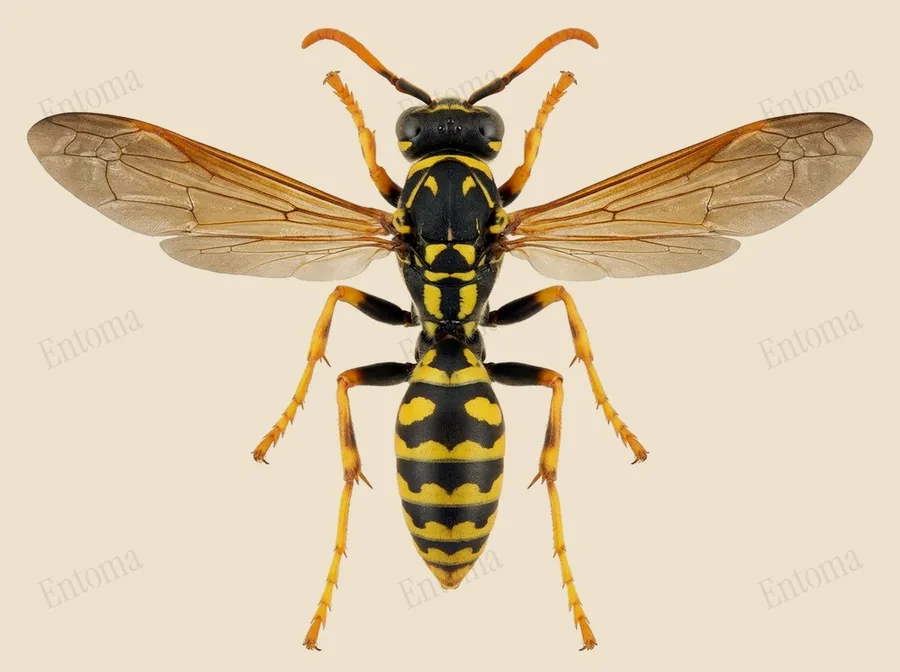
European paper wasp
The black markings on a European paper wasp's face signal its fighting strength to rivals, but unlike an American relative, it does not learn to recognize individual wasps.
| Where | Sunny gardens, sheds and eaves |
|---|---|
| Size | 18 to 22 mm body length |
| When | March to October |
The European paper wasp is black marked with yellow, has bright orange antennae unlike common yellowjackets, and shows a narrow waist and long legs that trail visibly below the body in flight.
A mated queen builds a small, open, umbrella-shaped paper nest with no outer covering in a sheltered sunny spot, and the colony she raises lasts only a single season before the workers and old queen die off.
Traits
Habitat
Garden
Colour
Black, Yellow, Orange
Active
Day
To people
Take care
Stings if handled or if its open nest is disturbed, though it is generally calmer around people than a yellowjacket.
Activity through the year
Often confused with
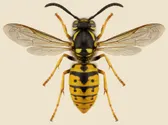
Similar in overall size but bulkier bodied, with a hidden paper nest inside a cavity rather than the open, umbrella-shaped, uncovered nest built by the European paper wasp.
Questions
Is the European paper wasp dangerous to people?
Take care. Stings if handled or if its open nest is disturbed, though it is generally calmer around people than a yellowjacket.
When can you see the European paper wasp?
The European paper wasp can be seen from March to October, by day.
Plate retouched from a museum specimen photo by Malinen, Pekka, Finnish Museum of Natural History - Zoology Unit, CC BY 4.0, GBIF Licence
Report a mistake in this entry
Bees, wasps and ants›Potter wasps›Polistes
Last updated 2026-09-26. Every entry is checked against published sources.