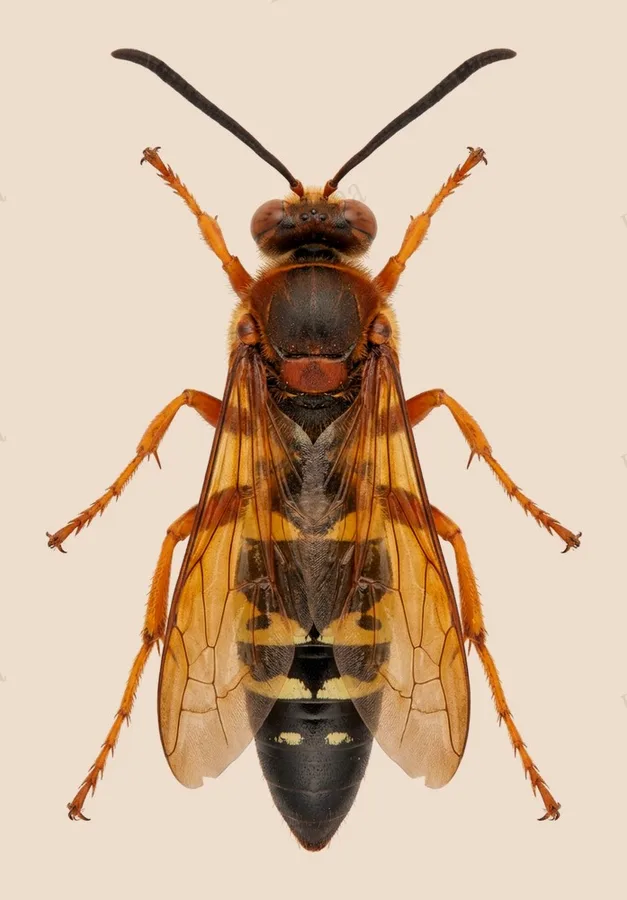
Eastern cicada-killer wasp
Male Eastern Cicada-killer Wasps cannot sting at all, yet they are the ones that dive-bomb people near lawns and sidewalks while guarding territory.
| Where | Sunny lawns, gardens and sandy soil |
|---|---|
| Size | 29 to 41 mm body length |
| When | June to September |
This robust wasp has a reddish head and thorax, a black abdomen banded with yellow, and rust-tinted, translucent wings, making it one of the largest wasps in North America. Males are smaller than females and patrol nest sites, clashing with other insects, while females do the digging and hunting.
Females dig burrows in sunny, sandy lawns, paths and golf courses, each stocked with a cicada they have paralyzed with a sting to feed a single larva. Adults emerge in early summer, live for a couple of months, and feed on nectar rather than the cicadas they hunt for their young.
Traits
Habitat
Towns
Colour
Black, Yellow, Brown
Active
Day
To people
Mild
Females rarely sting people and only when handled roughly; males cannot sting despite aggressive-looking flights.
Activity through the year
Often confused with
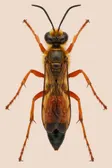
Has a black head and thorax with golden hairs and only the front of the abdomen orange-red, unlike the reddish head and thorax and bold yellow-banded abdomen of the Eastern Cicada-killer Wasp.
Questions
Is the Eastern cicada-killer wasp dangerous to people?
Mild. Females rarely sting people and only when handled roughly; males cannot sting despite aggressive-looking flights.
When can you see the Eastern cicada-killer wasp?
The Eastern cicada-killer wasp can be seen from June to September, by day.
Plate retouched from a photo by Andrew Conboy, CC BY 4.0, iNaturalist Licence
Report a mistake in this entry
Bees, wasps and ants›Crabronid wasps›Sphecius
Last updated 2026-09-26. Every entry is checked against published sources.