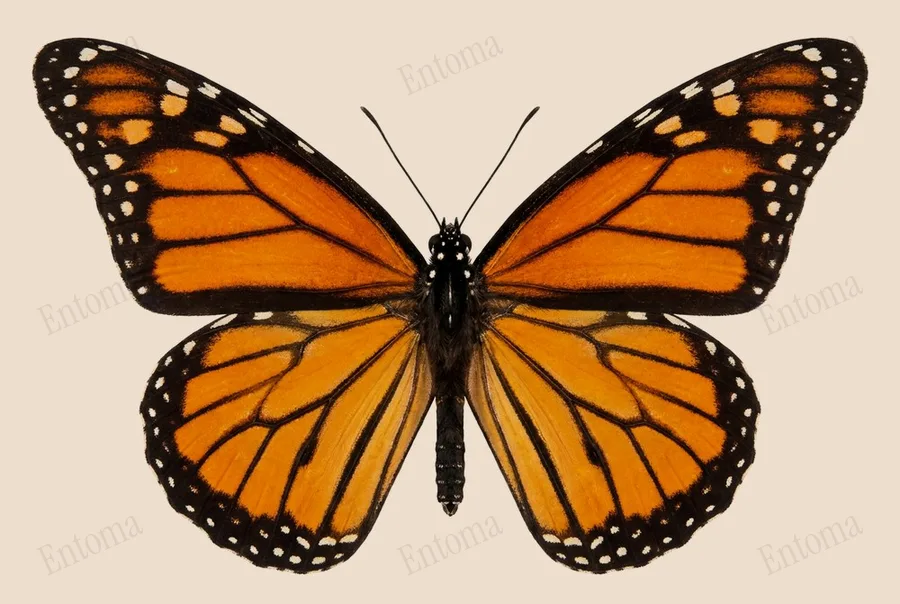
Monarch
Monarch caterpillars absorb toxic compounds from milkweed and retain them through metamorphosis, so adult monarchs stay distasteful to birds for life.
| Where | Meadows, gardens and open fields |
|---|---|
| Size | 89 to 102 mm wingspan |
| When | April to November |
Adult monarchs have bright orange wings crossed by black veins and edged in black, with two rows of white spots along the margins. The wingspan measures roughly 89 to 102 millimeters, and males show a small black scent patch on each hindwing that females lack.
Monarchs east of the Rocky Mountains fly thousands of kilometers each autumn to overwintering forests in central Mexico, while western populations winter along the Pacific coast, and it takes several generations to complete the return trip north each spring and summer.
Traits
Habitat
Grassland
Colour
Orange, Black, White
Active
Day
To people
Mild
A familiar garden and migration icon; safe to handle, though its tissues carry mild toxins that make it distasteful if eaten.
Activity through the year
Often confused with
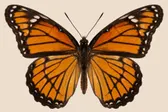
Smaller, with an extra black line crossing the veins of the hindwing that the Monarch lacks.
Questions
Is the Monarch dangerous to people?
Mild. A familiar garden and migration icon; safe to handle, though its tissues carry mild toxins that make it distasteful if eaten.
When can you see the Monarch?
The Monarch can be seen from April to November, by day.
Plate retouched from a photo by Leila Dasher, CC BY 4.0, iNaturalist Licence
Report a mistake in this entry
Butterflies and moths›Brush-footed butterflies›Danaus
Last updated 2026-09-26. Every entry is checked against published sources.