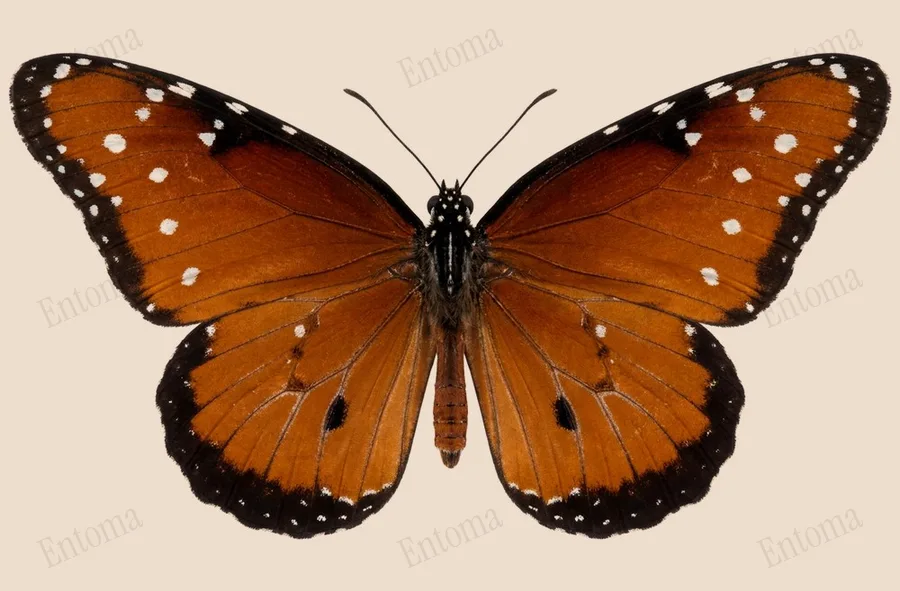
Queen
Male queen butterflies carry brush-like hairpencils on the abdomen that dust females with a courtship perfume made from toxic compounds gathered as caterpillars.
| Where | Fields, roadsides and gardens |
|---|---|
| Size | 70 to 88 mm wingspan |
| When | April to January |
The Queen is orange-brown above with black wing borders and small white spots near the forewing tip, appearing darker and less strongly veined than the related monarch. Males carry a black scent patch on each hindwing used to release courtship pheromones.
Caterpillars feed on milkweeds and related vines across the southern United States, sequestering bitter cardenolide compounds that make the adults distasteful to many birds and other predators. Adults fly year round in the warmest parts of their range and stray north in late summer.
Traits
Habitat
Garden
Colour
Orange, Brown, Black
Active
Day
To people
Mild
Not dangerous to handle, though the bitter compounds it carries deter predators that try to eat it.
Activity through the year
Often confused with
Shows a band of pale spots on the underside of the hindwing that the Queen lacks, along with less strongly marked wing veins above.
Questions
Is the Queen dangerous to people?
Mild. Not dangerous to handle, though the bitter compounds it carries deter predators that try to eat it.
When can you see the Queen?
The Queen can be seen from April to January, by day.
Plate retouched from a photo by Caroline Kane, CC BY 4.0, iNaturalist Licence
Report a mistake in this entry
Butterflies and moths›Brush-footed butterflies›Danaus
Last updated 2026-09-26. Every entry is checked against published sources.