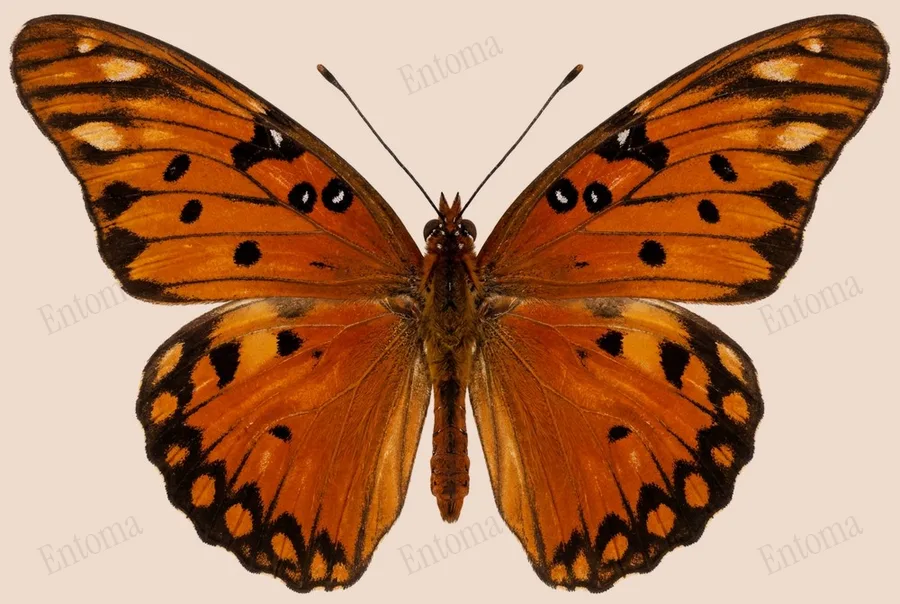
Gulf fritillary
Gulf Fritillary wings are bright orange above but flash long, mirror-like silvery-white spots on the underside when the butterfly folds them at rest.
| Where | Open fields, gardens and woodland edges |
|---|---|
| Size | 63 to 95 mm wingspan |
| When | April to December |
The upperside of the wings is bright orange with black spots and streaks, while the underside is patterned with elongated silvery-white spots on a warm brown background, a striking contrast visible whenever the butterfly closes its wings. The wingspan runs from about 63 to 95 millimeters.
Caterpillars feed exclusively on passionflower vines, and where the host plant survives winter this species can be seen on the wing nearly year round in the warmest parts of its range, with several overlapping generations each year.
Traits
Habitat
Garden
Colour
Orange, Black, Metallic
Active
Day
To people
Common in butterfly gardens planted with passionflower vine; harmless to handle.
Activity through the year
Often confused with
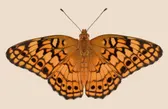
Smaller and duller orange-brown, lacking the Gulf Fritillary's silvery-white spots on the underside of the wings.
Questions
Is the Gulf fritillary dangerous to people?
Common in butterfly gardens planted with passionflower vine; harmless to handle.
When can you see the Gulf fritillary?
The Gulf fritillary can be seen from April to December, by day.
Plate retouched from a photo by Ethan, CC BY 4.0, iNaturalist Licence
Report a mistake in this entry
Butterflies and moths›Brush-footed butterflies›Dione
Last updated 2026-09-26. Every entry is checked against published sources.