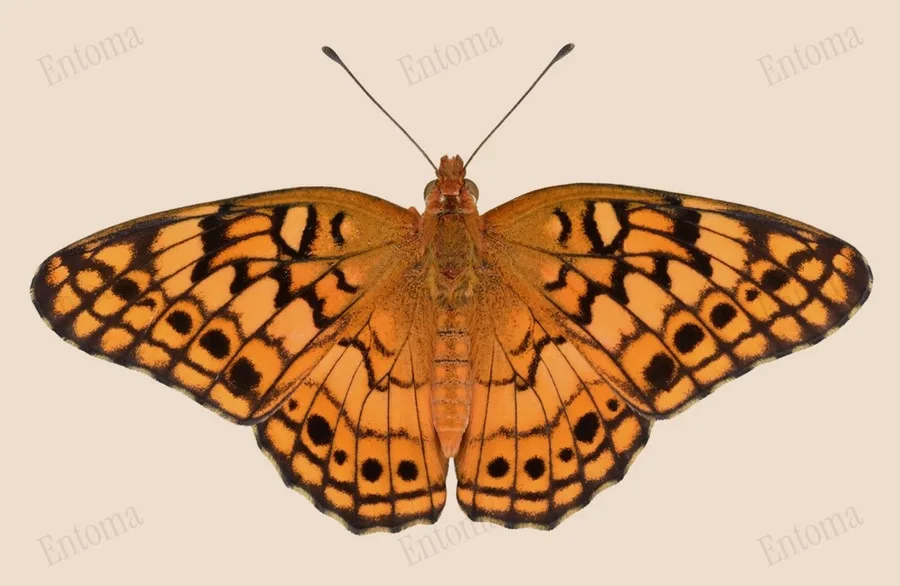
Variegated fritillary
Unlike most fritillaries, which fly once a year near violets, this species produces two or three generations annually on a wide range of unrelated host plants.
| Where | Fields, meadows and roadsides |
|---|---|
| Size | 44 to 57 mm wingspan |
| When | April to November |
The upperside is checkered orange and black with rows of dark spots, while the underside of the hindwing is mottled brown and gray without the bright silvery spots found in many other fritillaries.
Caterpillars feed on plants such as passionflower, violets, pansy and purslane rather than only violets, and the species is nomadic, regularly turning up well outside its usual breeding range.
Traits
Habitat
Grassland
Colour
Orange, Black
Active
Day
To people
Harmless to people; adults are strong, fast fliers that are hard to approach at rest.
Activity through the year
Often confused with
Larger, with a wingspan of about 62 to 88 mm, and shows bright silvery white spots on the underside of the hindwing that the Variegated fritillary lacks.
Questions
Is the Variegated fritillary dangerous to people?
Harmless to people; adults are strong, fast fliers that are hard to approach at rest.
When can you see the Variegated fritillary?
The Variegated fritillary can be seen from April to November, by day.
Plate retouched from a photo by skitterbug, CC BY 4.0, iNaturalist Licence
Report a mistake in this entry
Butterflies and moths›Brush-footed butterflies›Euptoieta
Last updated 2026-09-26. Every entry is checked against published sources.