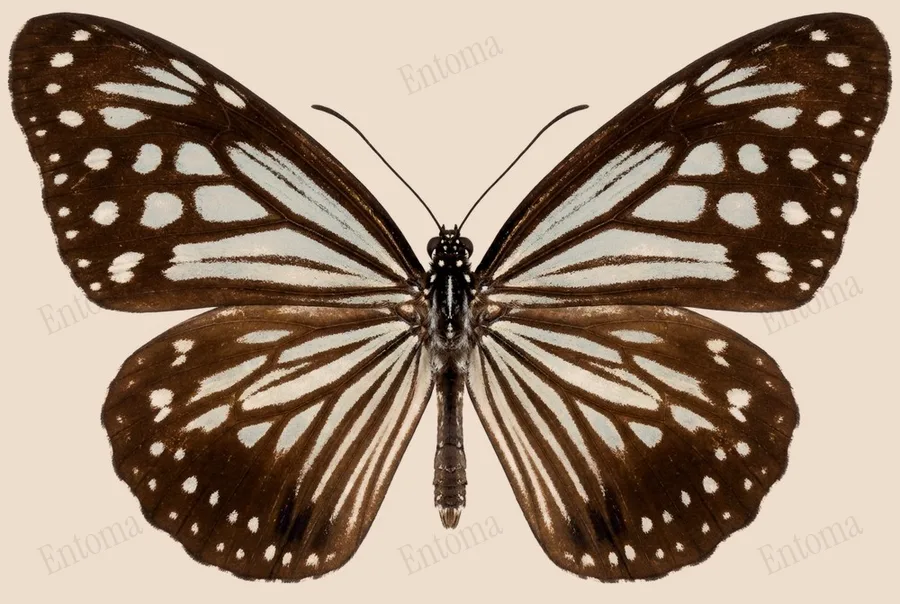
Dark glassy tiger
Its caterpillars feed on a mangrove vine that carries plant toxins, and alarmed males flick out bright yellow scent brushes to disperse a defensive perfume.
| Where | Mangroves, wetland reserves and parks |
|---|---|
| Size | 60 to 75 mm wingspan |
| When | January to December |
The dark glassy tiger has bluish grey wings with black veins and margins. A long pale streak sits above the cell on the forewing, where narrow black lines divide the grey patch into two or three sections running lengthwise, a pattern that separates it from other glassy tigers sharing the same wetland habitats.
Caterpillars feed on the vine Tylophora flexuosa, and like other tiger butterflies the adults are thought to carry plant compounds that make them distasteful to predators. Alarmed males expose bright yellow hair pencils near the tip of the abdomen to release a defensive scent.
Traits
Habitat
Wetland
Colour
Blue, Black, Grey
Active
Day
To people
Mild
Thought to be distasteful to predators after feeding on its host vine as a caterpillar; not known to trouble people directly.
Activity through the year
Often confused with
A transverse black bar crosses the forewing cell and cuts through one of the pale streaks, unlike the lengthwise black lines that divide the same streaks on the dark glassy tiger.
Questions
Is the Dark glassy tiger dangerous to people?
Mild. Thought to be distasteful to predators after feeding on its host vine as a caterpillar; not known to trouble people directly.
When can you see the Dark glassy tiger?
The Dark glassy tiger can be seen from January to December, by day.
Plate retouched from a museum specimen photo by Swiss Natural History Collections - SwissNatColl, CC BY 4.0, GBIF Licence
Report a mistake in this entry
Butterflies and moths›Brush-footed butterflies›Parantica
Last updated 2026-09-27. Every entry is checked against published sources.