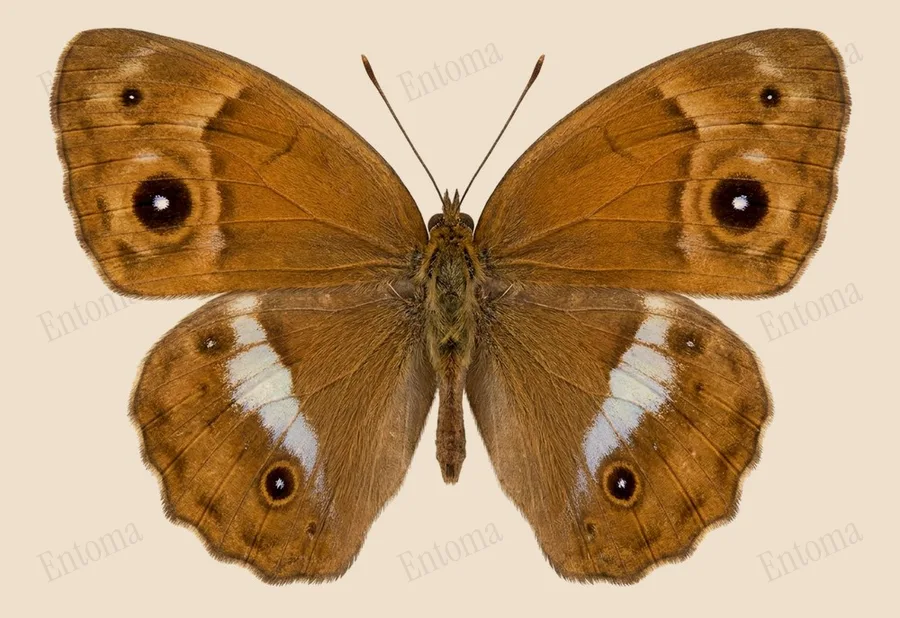
Burmese bushbrown
Its caterpillars forcefully eject their frass pellets away from their bodies, a habit that helps hide their location from predators and parasites.
| Where | Grassy patches and forest edges |
|---|---|
| Size | 40 to 50 mm wingspan |
| When | January to December |
The Burmese bushbrown is dull brown above with a prominent yellow ringed eyespot in space 2 of the forewing, and two fainter eyespots on the hindwing. Males carry a dark sex brand above vein 7 on the hindwing, and the species is best told from similar bushbrowns by its larger, more clearly yellow ringed forewing eyespot.
Caterpillars feed on grasses, and final instars occur in brown or green forms. Adults fly low among grassy patches at forest edges with the jerky, erratic flight typical of this group, keeping their wings closed for long stretches between wingbeats.
Traits
Habitat
Grassland
Colour
Brown, Yellow
Active
Day
To people
Not known to bother people; adults fly low among grasses at forest edges.
Activity through the year
Often confused with
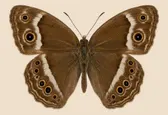
Very similar, but the male sex mark on the forewing underside is smaller and black rather than the larger, warm ochraceous brown mark of the Burmese bushbrown.
Questions
Is the Burmese bushbrown dangerous to people?
Not known to bother people; adults fly low among grasses at forest edges.
When can you see the Burmese bushbrown?
The Burmese bushbrown can be seen from January to December, by day.
Plate retouched from a museum specimen photo by Swiss Natural History Collections - SwissNatColl, CC BY 4.0, GBIF Licence
Report a mistake in this entry
Butterflies and moths›Brush-footed butterflies›Mycalesis
Last updated 2026-09-27. Every entry is checked against published sources.