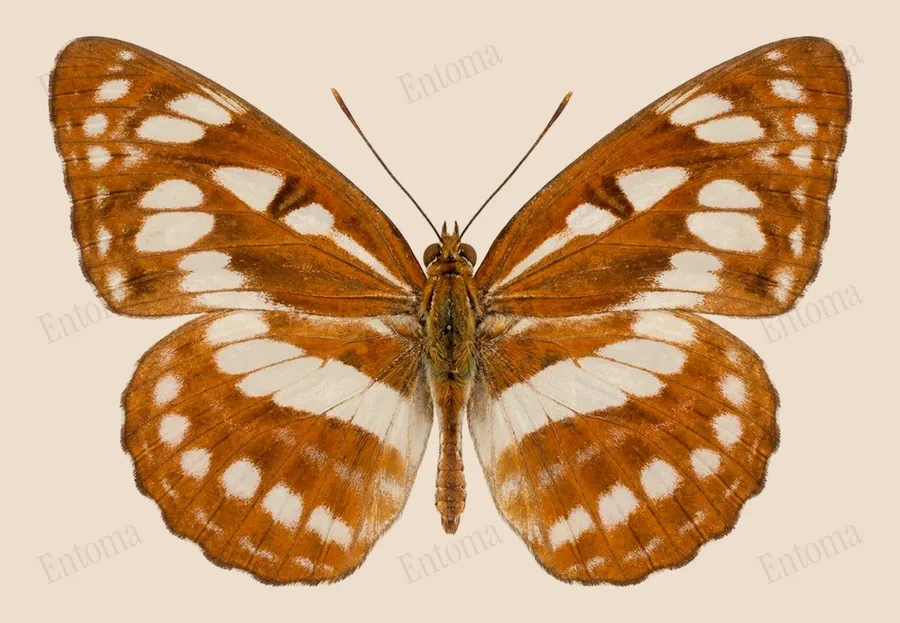
Short banded sailer
Every other sailor butterfly in the region belongs to a different genus, but this species is the sole local member of its own.
| Where | Forest edges, parks and gardens |
|---|---|
| Size | 60 to 70 mm wingspan |
| When | January to December |
The short banded sailer is black above with white markings. The triangular discal patch on the forewing is rounded rather than elongated, and the broad white discal band on the hindwing does not reach the costa; the underside ground colour is deep orange brown.
Caterpillars feed on middle aged and older leaves of several trees, including angsana and sea hibiscus. Adults favour sunlit spots and glide gracefully with wings fully open, ranging from forest edges to parks and gardens.
Traits
Habitat
Woodland
Colour
Black, White, Brown
Active
Day
To people
Not known to bother people; adults visit flowers and ripening fruit in sunlit spots.
Activity through the year
Often confused with
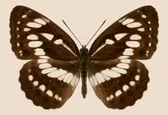
On this species the white discal band on the hindwing underside is prominently outlined in black, while on the short banded sailer the same band is not clearly outlined.
Questions
Is the Short banded sailer dangerous to people?
Not known to bother people; adults visit flowers and ripening fruit in sunlit spots.
When can you see the Short banded sailer?
The Short banded sailer can be seen from January to December, by day.
Plate retouched from a museum specimen photo by Swiss Natural History Collections - SwissNatColl, CC BY 4.0, GBIF Licence
Report a mistake in this entry
Butterflies and moths›Brush-footed butterflies›Phaedyma
Last updated 2026-09-27. Every entry is checked against published sources.