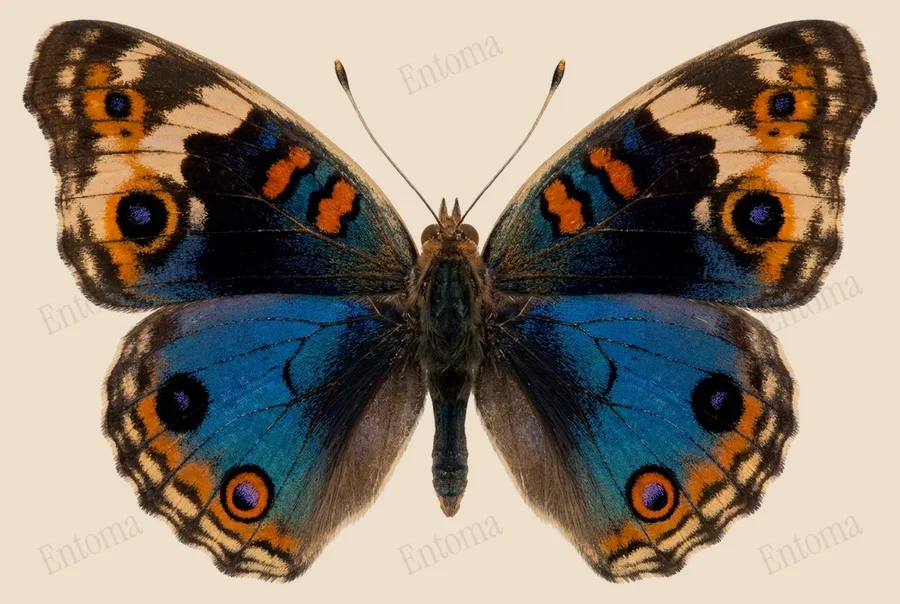
Blue pansy
This butterfly often basks directly on patches of bare open ground with its wings spread flat, warming itself where there is little plant cover to block the sun.
| Where | Open grassland, roadsides and farmland |
|---|---|
| Size | 40 to 55 mm wingspan |
| When | January to December |
Males are marked with black and vivid blue above, each wing carrying a large eyespot ringed in orange, while the hindwing shows a broad blue patch bordered by black. Females share the same eyespot pattern but are duller, with more brown replacing the blue.
Adults favour open, disturbed ground such as roadsides, farmland and grassy clearings, where they bask with wings held flat against the soil. Caterpillars feed on low plants in the Acanthaceae family, including Asystasia and Hypoestes species, among other herbaceous hosts.
Traits
Habitat
Grassland
Colour
Blue, Black, Orange
Active
Day
To people
Harmless to people; adults bask on bare ground and visit flowers for nectar.
Activity through the year
Often confused with
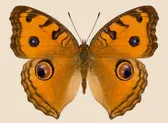
The Peacock pansy is rich orange yellow above with large ringed eyespots on both wings, quite different from the Blue pansy's blue and black pattern.
Questions
Is the Blue pansy dangerous to people?
Harmless to people; adults bask on bare ground and visit flowers for nectar.
When can you see the Blue pansy?
The Blue pansy can be seen from January to December, by day.
Plate retouched from a museum specimen photo by Swiss Natural History Collections - SwissNatColl, CC BY 4.0, GBIF Licence
Report a mistake in this entry
Butterflies and moths›Brush-footed butterflies›Junonia
Last updated 2026-09-27. Every entry is checked against published sources.