Peacock pansy
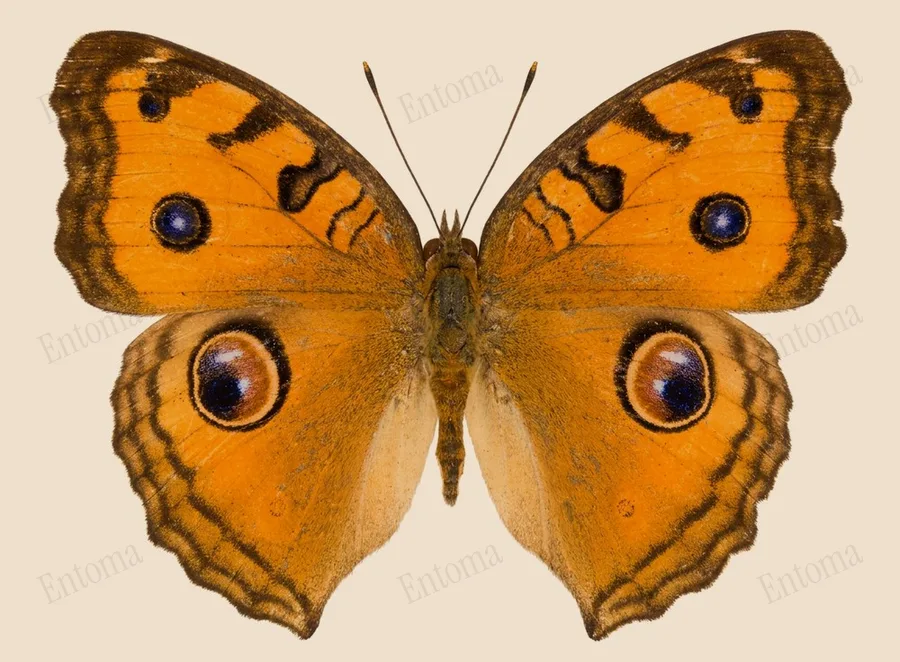
Each hindwing carries one eye-spot far larger than any other wing marking, prominent enough to give this pansy its peacock name.
| Where | Open areas, parks and gardens |
|---|---|
| Size | 40 to 62 mm wingspan |
| When | January to December |
The Peacock pansy has rich yellowish brown to orange wings with darker margins, four dark costal bars on the forewing and a large, prominent eye-spot near the apex of each hindwing, with smaller and duller markings on the underside. It baskets with wings spread wide in sunny weather.
Caterpillars feed on a range of low plants in the Acanthaceae family such as Barleria and Hygrophila, alongside unrelated hosts including waterside verbena and grasses, and adults gather in numbers at flowers and damp ground across their range.
Traits
Habitat
Garden
Colour
Orange, Brown, Black
Active
Day
To people
Basks often with wings open; safe to touch.
Activity through the year
Often confused with
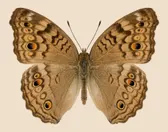
Pale greyish buff above with black-bordered eye-spots split into separate orange and black halves, rather than the rich orange yellow ground colour and single large hindwing eye-spot of the Peacock pansy.
Questions
Is the Peacock pansy dangerous to people?
Basks often with wings open; safe to touch.
When can you see the Peacock pansy?
The Peacock pansy can be seen from January to December, by day.
Plate retouched from a museum specimen photo by Swiss Natural History Collections - SwissNatColl, CC BY 4.0, GBIF Licence
Report a mistake in this entry
Butterflies and moths›Brush-footed butterflies›Junonia
Last updated 2026-09-27. Every entry is checked against published sources.