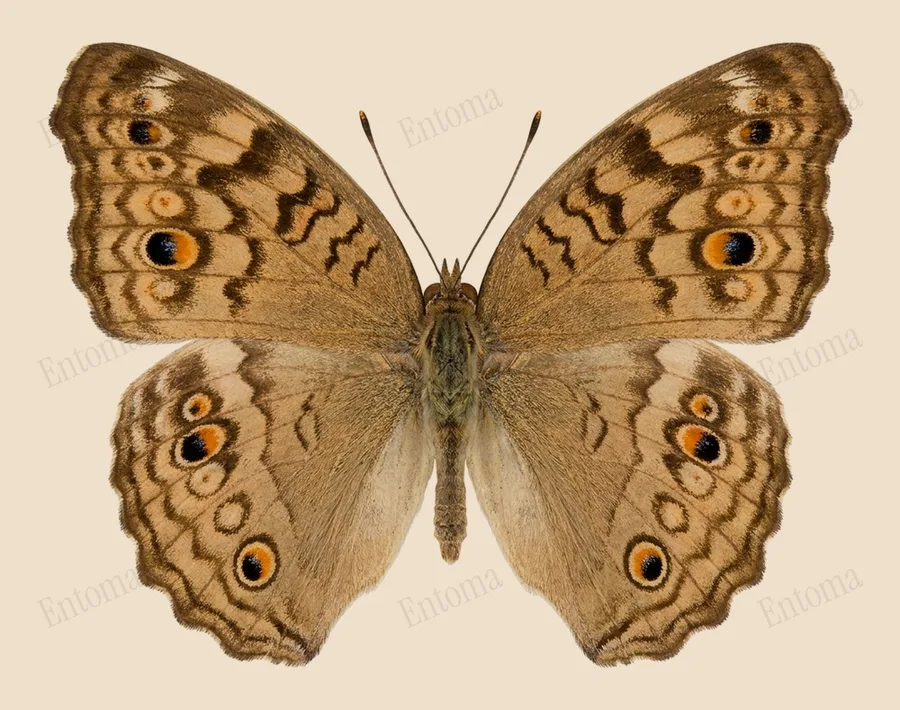
Grey pansy
It suns itself with wings spread flat on low plants, though its caterpillars feed on ground-hugging herbs that often grow at the damp edges of ponds and streams.
| Where | Damp grassland and stream edges |
|---|---|
| Size | 50 to 65 mm wingspan |
| When | January to December |
The Grey pansy has pale greyish buff wings marked with dark brown lines and a row of eye-spots divided into an outer black half and an inner orange half on both wing pairs. It flies with the slow, gliding wingbeats typical of the pansy butterflies and often rests with wings held wide open in sunny spots.
Caterpillars feed on low, ground-hugging herbs in the Acanthaceae and Plantaginaceae families that grow at damp field edges and stream banks, and in some populations the larvae feed on leaves held underwater, keeping only their breathing spiracles above the surface before crawling out to pupate on land.
Traits
Habitat
Wetland
Colour
Grey, Brown, Orange
Active
Day
To people
Suns itself openly on low plants; safe to touch.
Activity through the year
Often confused with
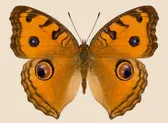
Rich orange yellow above with one large simple eye-spot on each wing, rather than the pale greyish buff ground colour and small eye-spots split into orange and black halves seen on the Grey pansy.
Questions
Is the Grey pansy dangerous to people?
Suns itself openly on low plants; safe to touch.
When can you see the Grey pansy?
The Grey pansy can be seen from January to December, by day.
Plate retouched from a museum specimen photo by Swiss Natural History Collections - SwissNatColl, CC BY 4.0, GBIF Licence
Report a mistake in this entry
Butterflies and moths›Brush-footed butterflies›Junonia
Last updated 2026-09-27. Every entry is checked against published sources.