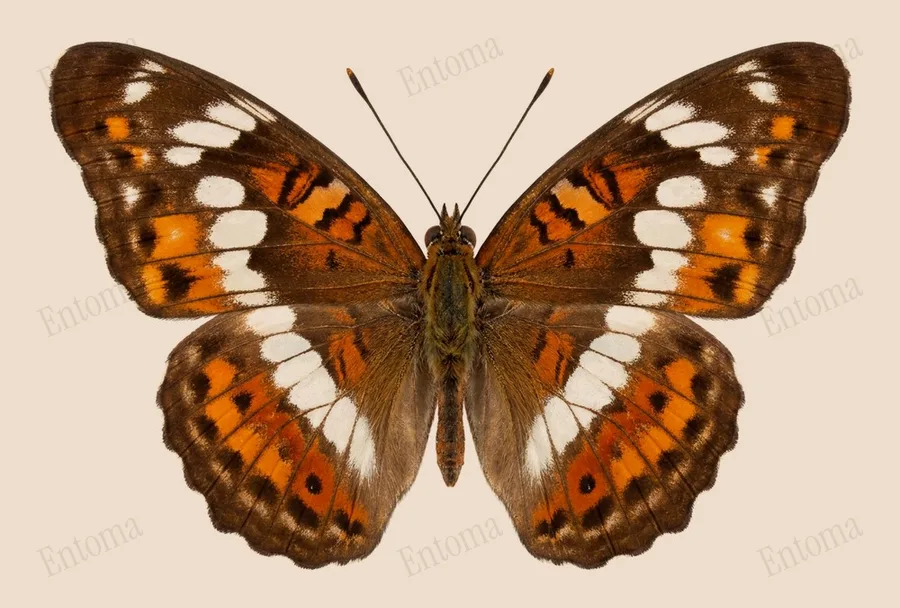
Knight
Males of this butterfly show off a bold white forewing patch that females lack entirely, an unusually clear difference between the sexes for a forest butterfly.
| Where | Forest interior, edges and parks |
|---|---|
| Size | 50 to 65 mm wingspan |
| When | January to December |
The Knight is an ochreous brown butterfly crossed by a broad white band on the forewing that continues onto the hindwing in males, tapering toward the wing's inner edge. Females are slightly larger and a little darker, without the male's white patch near the forewing tip.
It lives in lowland and hill forest up to about 1200 metres, favouring shaded understorey but basking in sunny clearings, and its caterpillars feed on Ixora and several other forest shrubs.
Traits
Habitat
Woodland
Colour
Brown, White
Active
Day
To people
Basks in sunny forest clearings; harmless to people.
Activity through the year
Often confused with
White band forms a V shape across both wings with extra scattered white spots, rather than the single diagonal white band crossing the Knight's forewing and hindwing.
Questions
Is the Knight dangerous to people?
Basks in sunny forest clearings; harmless to people.
When can you see the Knight?
The Knight can be seen from January to December, by day.
Plate retouched from a museum specimen photo by Swiss Natural History Collections - SwissNatColl, CC BY 4.0, GBIF Licence
Report a mistake in this entry
Butterflies and moths›Brush-footed butterflies›Lebadea
Last updated 2026-09-27. Every entry is checked against published sources.