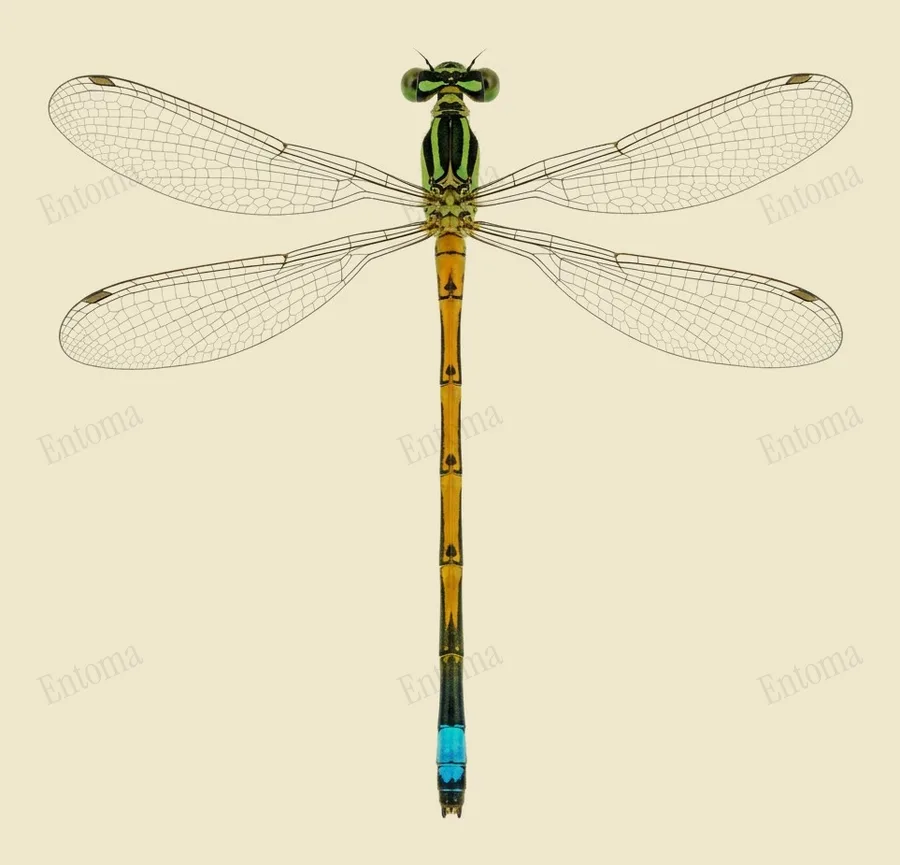
Western golden dartlet
Males of this small damselfly have wings tinted rose red at the base and pale grey toward the tip, unlike the clear wings of most related damselflies.
| Where | Weedy ponds, lakes and marshes |
|---|---|
| Size | 18 to 19 mm abdomen length |
| When | January to December |
The Western golden dartlet is a small damselfly. Males have a black capped, olive green head, a bronzed black thorax with narrow olive green stripes, and a rusty yellow abdomen tipped with azure blue on the last two segments. Females are stockier, with a broad black stripe running the length of the abdomen.
It breeds in weedy ponds, lakes and marshes with plenty of low aquatic vegetation, and is common and widespread across the Indian subcontinent. It was long treated as a form of the Pacific species Ischnura aurora before genetic and structural differences confirmed it as a separate species.
Traits
Habitat
Wetland
Colour
Red, Yellow, Blue
Active
Day
To people
Harmless to people; adults hunt small flying insects low over ponds and marshes.
Activity through the year
Often confused with
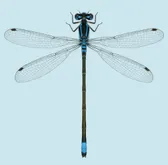
The Common bluetail has a blue green, not olive green, eye cap, and its black abdominal markings stop at segment seven, unlike the Western golden dartlet's rusty yellow abdomen with blue confined to segments eight and nine.
Questions
Is the Western golden dartlet dangerous to people?
Harmless to people; adults hunt small flying insects low over ponds and marshes.
When can you see the Western golden dartlet?
The Western golden dartlet can be seen from January to December, by day.
Plate retouched from a photo by Chandu Bandi, CC BY 4.0, iNaturalist Licence
Report a mistake in this entry
Dragonflies and damselflies›Narrow-winged damselflies›Ischnura
Last updated 2026-09-27. Every entry is checked against published sources.