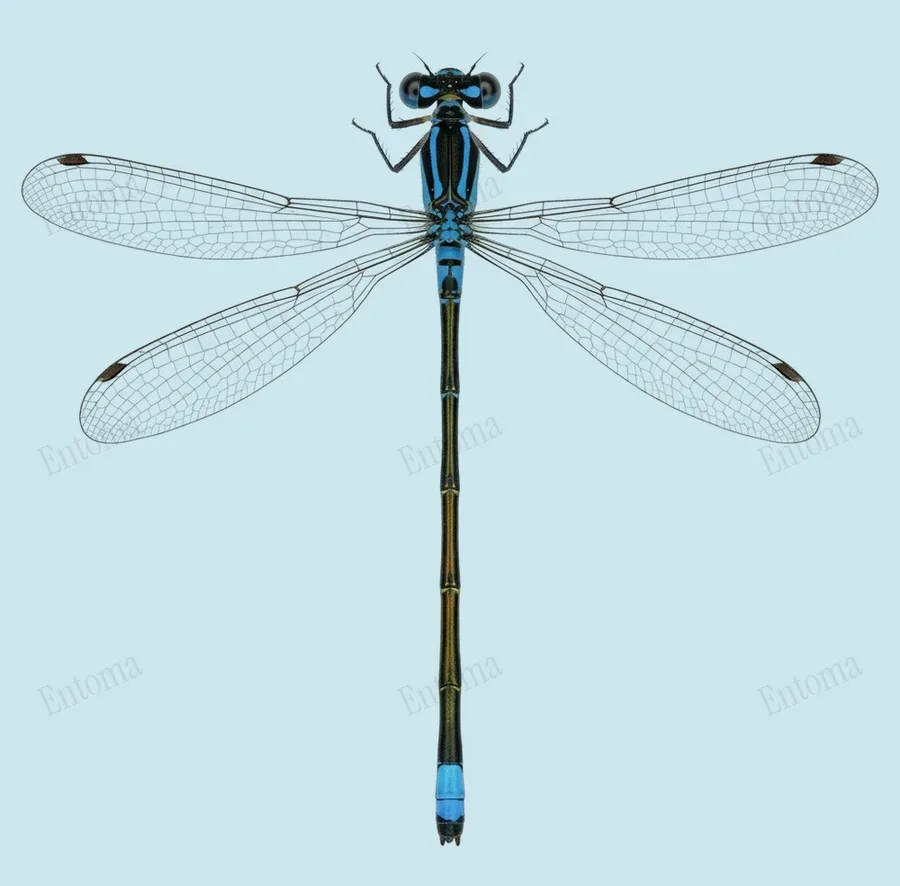
Common bluetail
Females of this damselfly come in two different color forms, one that mimics the blue of males and another that turns orange yellow as it matures.
| Where | Rice paddies, ponds and marshes |
|---|---|
| Size | 28 to 38 mm body length |
| When | April to November |
Males are blue on the head, the sides of the thorax and the tip of the abdomen, with the rest of the abdomen black above. Females occur in two color forms, one resembling the male's blue pattern and another that develops a greenish or orange-yellow tone as it ages.
It breeds in still or slow-moving water such as rice paddies, ponds and marshes, showing little preference for any one type of wetland. Adults are on the wing across most of the year in the warmer parts of its range, from spring well into autumn.
Traits
Habitat
Wetland
Colour
Blue, Black
Active
Day
To people
Harmless to people; it has no sting or bite and is often seen resting on waterside plants.
Activity through the year
Often confused with
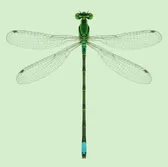
Mature females lack the blue marking on the second abdominal segment that is present in female Common bluetails, otherwise a very similar small damselfly.
Questions
Is the Common bluetail dangerous to people?
Harmless to people; it has no sting or bite and is often seen resting on waterside plants.
When can you see the Common bluetail?
The Common bluetail can be seen from April to November, by day.
Plate retouched from a photo by Wolfgang Ahlmer, CC BY 4.0, iNaturalist Licence
Report a mistake in this entry
Dragonflies and damselflies›Narrow-winged damselflies›Ischnura
Last updated 2026-09-27. Every entry is checked against published sources.