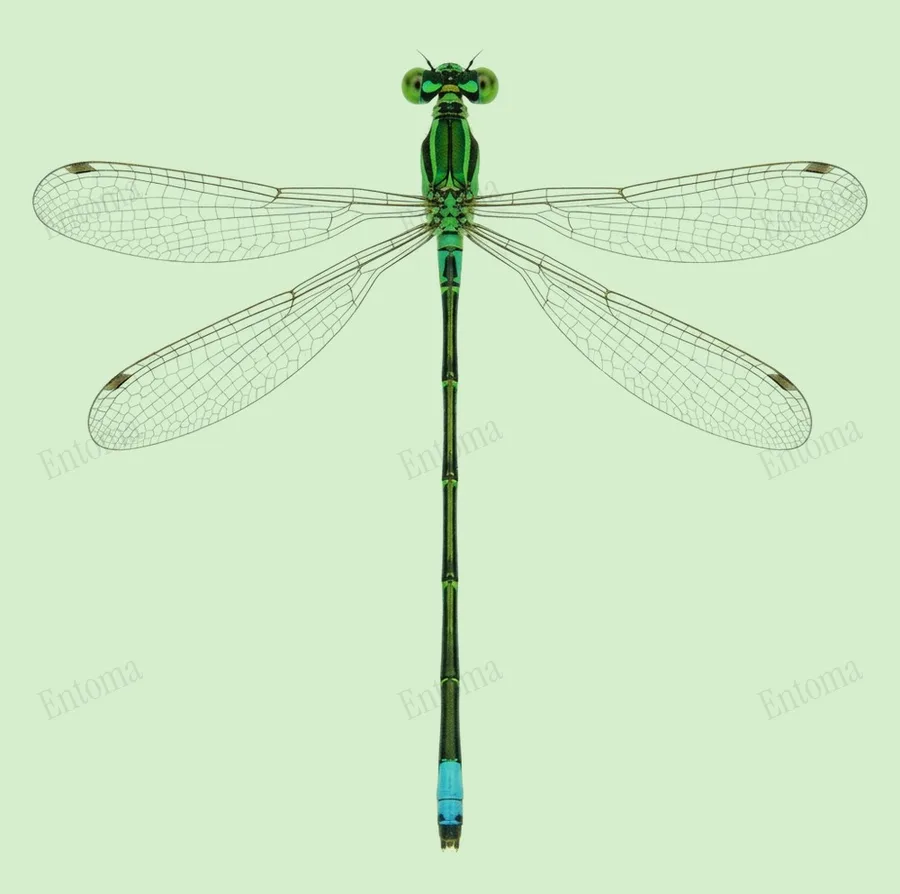
Ischnura asiatica
Females of this damselfly occur in two very different colour forms, one blue green like the male and one reddish orange, living side by side in the same population.
| Where | Ponds, marshes and paddies, East Asia |
|---|---|
| Size | 24 to 34 mm body length |
| When | April to October |
A small, slender damselfly; males show blue on the last abdominal segments against a mostly black body, while females appear either blue green or, in many populations, reddish orange instead.
It breeds in still or slow water such as rice paddies, marshes and ponds with plenty of aquatic plants, and adults can be seen close to water from spring well into autumn.
Traits
Habitat
Wetland
Colour
Blue, Black
Active
Day
To people
Harmless to people; it does not bite or sting and is often seen resting on waterside plants.
Activity through the year
Often confused with
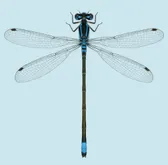
A very similar damselfly with blue restricted to a single segment near the abdomen tip, rather than spreading across two segments as in this species.
Questions
Is Ischnura asiatica dangerous to people?
Harmless to people; it does not bite or sting and is often seen resting on waterside plants.
When can you see Ischnura asiatica?
Ischnura asiatica can be seen from April to October, by day.
Plate retouched from a photo by Timur Kalininsky, CC BY 4.0, iNaturalist Licence
Report a mistake in this entry
Dragonflies and damselflies›Narrow-winged damselflies›Ischnura
Last updated 2026-09-27. Every entry is checked against published sources.