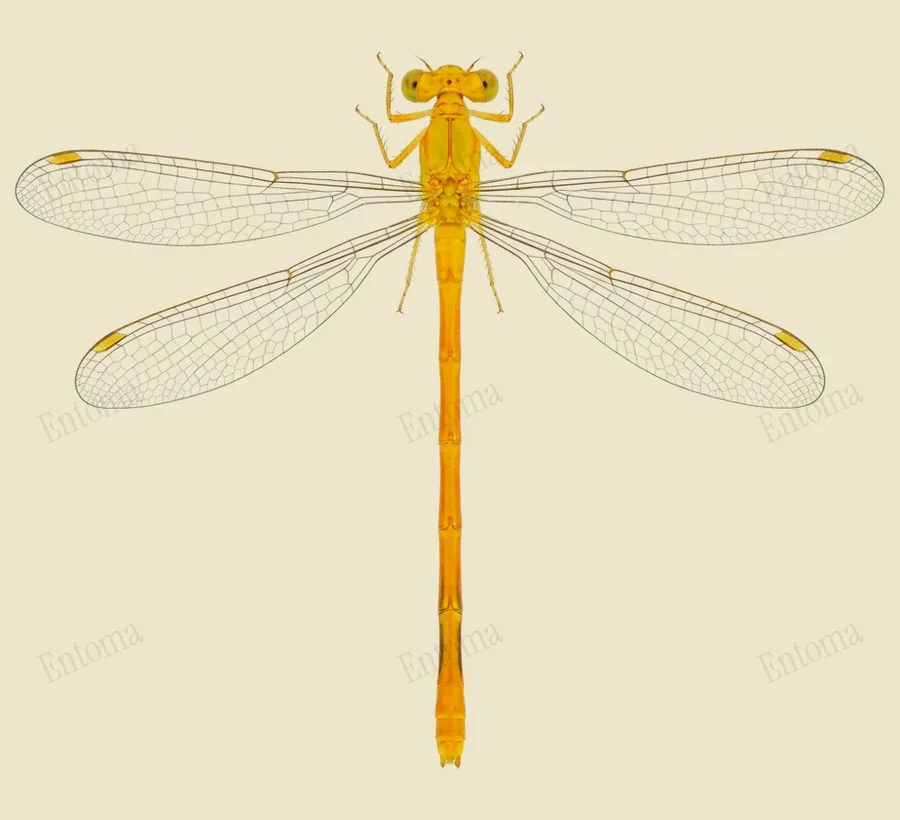
Coromandel marsh dart
The Coromandel marsh dart damselfly breeds in garden tubs and cement ponds as readily as in natural marshes, so long as some water plants are present.
| Where | Ponds, ditches and rice fields |
|---|---|
| Size | 28 to 32 mm abdomen length |
| When | January to December |
The Coromandel marsh dart is a slender, medium sized damselfly with an olive green thorax and a bright yellow abdomen in males, females showing a duller yellowish green to brownish body. The eyes are pale yellowish green, and the tip of the abdomen carries small, black tipped appendages.
It breeds in still, weedy water such as ponds, ditches, rice fields and ornamental tanks, and flies low among waterside bushes through most of the year across South and Southeast Asia.
Traits
Habitat
Wetland
Colour
Yellow, Green
Active
Day
To people
Harmless to handle; it has no sting or bite of concern to people.
Activity through the year
Often confused with
The Orange-tailed marsh dart shows a sharply two toned abdomen, black above and pale blue below with an orange red tip, while the Coromandel marsh dart is plain yellow along its whole abdomen.
Questions
Is the Coromandel marsh dart dangerous to people?
Harmless to handle; it has no sting or bite of concern to people.
When can you see the Coromandel marsh dart?
The Coromandel marsh dart can be seen from January to December, by day.
Plate retouched from a museum specimen photo by Naturalis Biodiversity Center, CC0, GBIF Licence
Report a mistake in this entry
Dragonflies and damselflies›Narrow-winged damselflies›Ceriagrion
Last updated 2026-09-27. Every entry is checked against published sources.