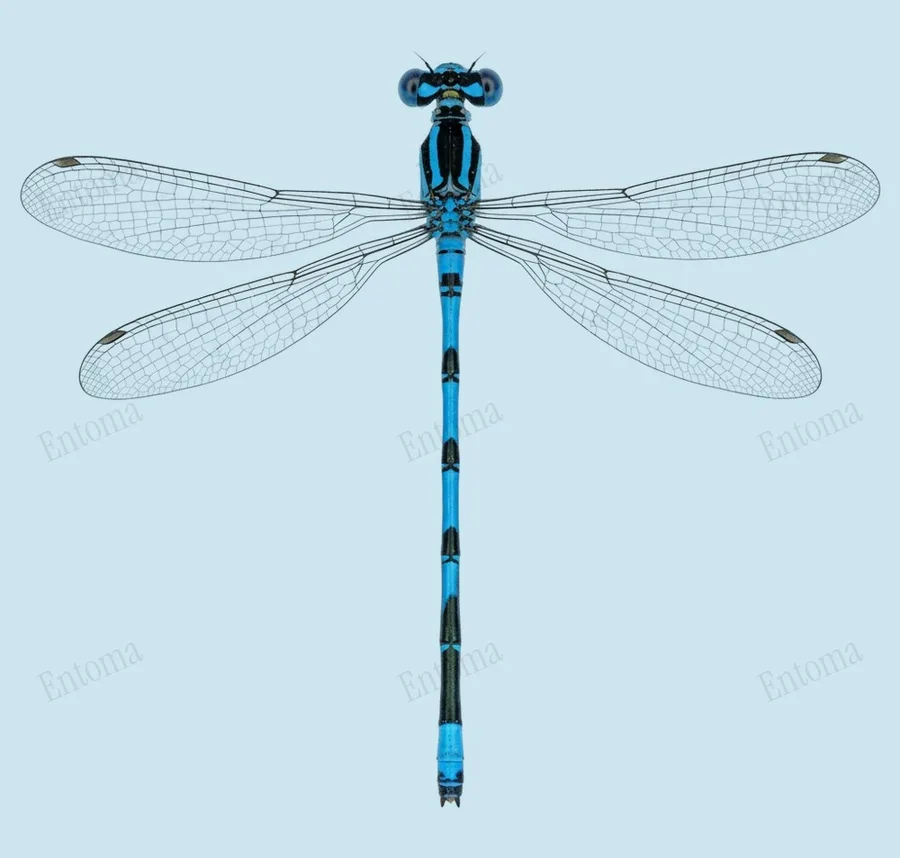
Pseudagrion siamense
This damselfly was hidden for decades inside records of a very similar species until a 2026 study examined specimens closely enough to recognise it as distinct.
| Where | Streams and still freshwater pools |
|---|---|
| Size | 38 to 42 mm body length, measured as the Blue sprite complex |
| When | January to December |
A slender black and blue damselfly of the Blue sprite group: males have an azure blue thorax with narrow black stripes, a mostly black abdomen with blue sides and a blue tip on segments eight and nine, while females are duller, with an orange-tinted head and thorax. Compared with its closest relatives it is a brighter blue, slightly smaller, and the male's upper appendages are longer.
It breeds along clear streams and still freshwater pools, where the neotype specimen used to formally redefine the species was collected from a stream site in Thailand.
Traits
Habitat
Wetland
Colour
Blue, Black
Active
Day
To people
Does not bite or sting; a delicate damselfly that poses no risk to people.
Activity through the year
Often confused with
Pseudagrion rubriceps has a red or orange face and reddish thorax markings on mature males, unlike the blue head and thorax typical of most Pseudagrion sprites.
Questions
Is Pseudagrion siamense dangerous to people?
Does not bite or sting; a delicate damselfly that poses no risk to people.
When can you see Pseudagrion siamense?
Pseudagrion siamense can be seen from January to December, by day.
Plate retouched from a photo by Kai Squires, CC BY 4.0, iNaturalist Licence
Report a mistake in this entry
Dragonflies and damselflies›Narrow-winged damselflies›Pseudagrion
Last updated 2026-09-27. Every entry is checked against published sources.