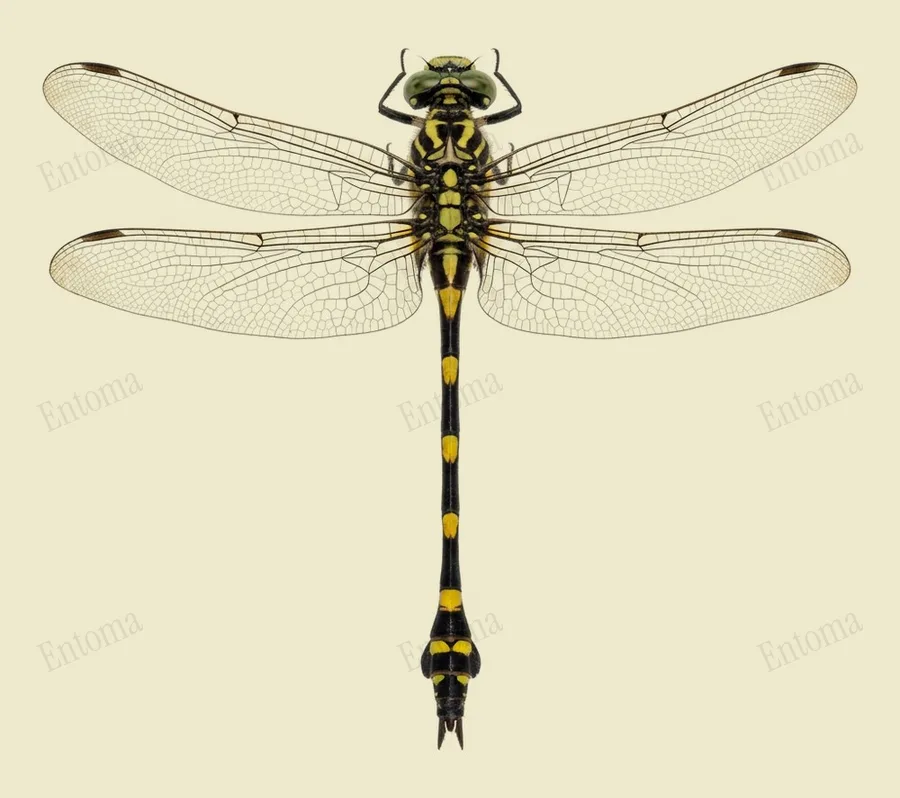
Common flangetail
This heavily built dragonfly hunts other dragonflies on the wing, including the common parasol, yet is itself regularly hunted by bee-eaters near the same ponds.
| Where | Ponds, lakes and slow streams |
|---|---|
| Size | 64 to 68 mm body length |
| When | January to December |
The common flangetail is a heavily built clubtail dragonfly with a dark body marked by greenish yellow bands and spots on the thorax and abdomen, well separated greyish green eyes, and broad rounded flanges on the underside of the eighth abdominal segment that give the species its name.
It breeds in ponds, lakes and slow flowing streams, and males perch horizontally on twig tips at the water's edge to guard their territory. Adults hunt other dragonflies on the wing, including the common parasol, and are themselves taken by bee-eaters hunting over the same water.
Traits
Habitat
Wetland
Colour
Black, Green, Yellow
Active
Day
To people
Not known to trouble people; adults simply hunt other flying insects over open water.
Activity through the year
Often confused with
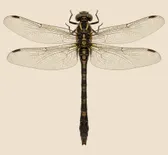
Nearly identical clubtail, best told apart by the yellow marking on the eighth abdominal segment, which forms a complete solid ring on this species but stays open on the common flangetail.
Questions
Is the Common flangetail dangerous to people?
Not known to trouble people; adults simply hunt other flying insects over open water.
When can you see the Common flangetail?
The Common flangetail can be seen from January to December, by day.
Plate retouched from a photo by Piotr Lukasik, CC BY 4.0, iNaturalist Licence
Report a mistake in this entry
Dragonflies and damselflies›Clubtails›Ictinogomphus
Last updated 2026-09-27. Every entry is checked against published sources.