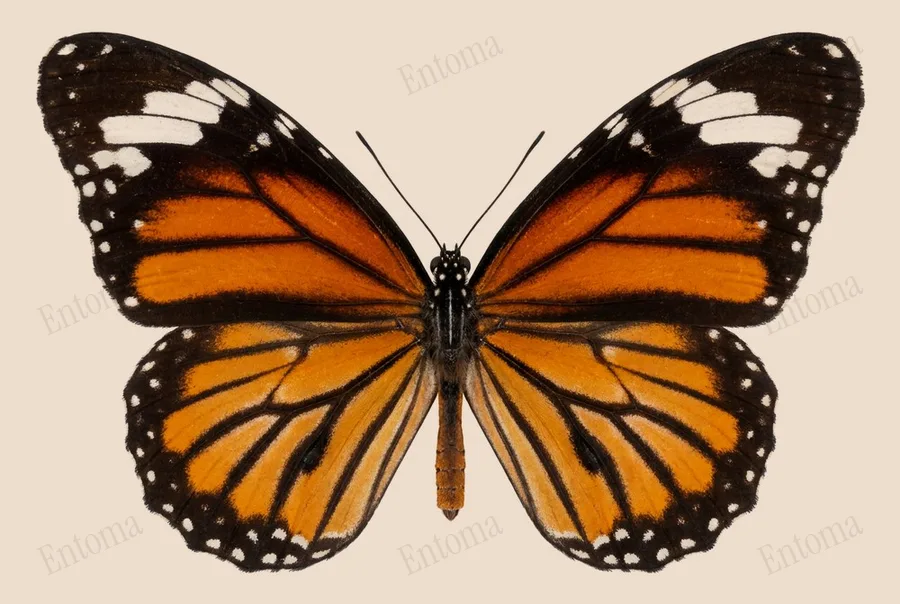
Common tiger butterfly
Its caterpillars store toxins from poisonous milkweed vines, making the adult distasteful enough that a bird which bites one usually releases it and flies off.
| Where | Scrub jungle and deciduous forest |
|---|---|
| Size | 70 to 95 mm wingspan |
| When | January to December |
The Common tiger butterfly has tawny orange wings crossed by broad black vein lines, with black wing margins carrying two rows of white spots, and males show a scent pouch on the hindwing. It flies with quicker, stronger wingbeats than its close relatives.
Caterpillars feed on milkweed vines and related plants in the Apocynaceae family, storing cardenolides and other plant toxins in their bodies that persist into the adult stage, making the butterfly unpalatable to birds that attack it.
Traits
Habitat
Woodland
Colour
Orange, Black, White
Active
Day
To people
Mild
Distasteful to predators if eaten; safe to handle.
Activity through the year
Often confused with
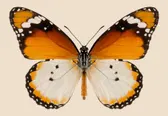
Slower, more leisurely wingbeats and a forewing tip without the extra row of white spots that marks the black wing margin of the Common tiger butterfly.
Questions
Is the Common tiger butterfly dangerous to people?
Mild. Distasteful to predators if eaten; safe to handle.
When can you see the Common tiger butterfly?
The Common tiger butterfly can be seen from January to December, by day.
Plate retouched from a photo by mnauky, CC BY 4.0, iNaturalist Licence
Report a mistake in this entry
Butterflies and moths›Brush-footed butterflies›Danaus
Last updated 2026-09-27. Every entry is checked against published sources.