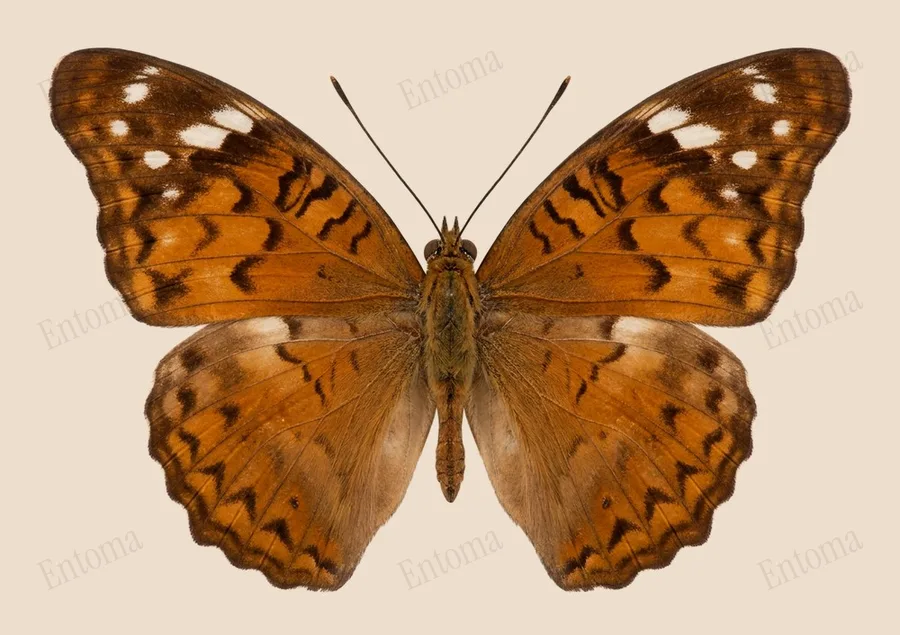
Common castor butterfly
Dry season adults grow noticeably larger than wet season adults of the same species, with wingspan nearly doubling between the two forms.
| Where | Farmland, wasteland and gardens |
|---|---|
| Size | 30 to 62 mm wingspan |
| When | June to April |
The Common castor butterfly is orange with brown, wavy transverse lines that form narrow zigzag patterns in the wet season and broader, paler bands in the dry season, when overall colouring is much lighter. Reduced, hairy front legs give it the brush footed look typical of its family.
Caterpillars feed almost exclusively on castor, Ricinus communis, a common wayside and farmland weed, and carry rows of short branched spines for defence, letting this butterfly thrive around farmland, wasteland and gardens across its range.
Traits
Habitat
Farmland
Colour
Orange, Brown
Active
Day
To people
Rests on low plants with wings closed; safe to touch.
Activity through the year
Often confused with
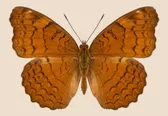
Narrower, less diffuse chestnut bands and a wavy, angled hindwing margin, rather than the broader, more diffuse bands and straighter margin of the Common castor butterfly.
Questions
Is the Common castor butterfly dangerous to people?
Rests on low plants with wings closed; safe to touch.
When can you see the Common castor butterfly?
The Common castor butterfly can be seen from June to April, by day.
Plate retouched from a museum specimen photo by Swiss Natural History Collections - SwissNatColl, CC BY 4.0, GBIF Licence
Report a mistake in this entry
Butterflies and moths›Brush-footed butterflies›Ariadne
Last updated 2026-09-27. Every entry is checked against published sources.