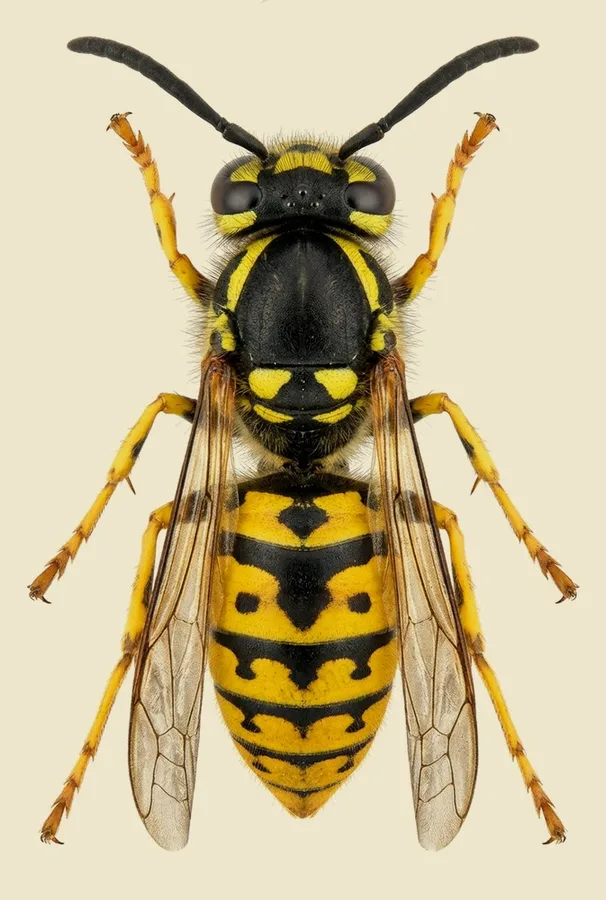
Western yellowjacket
Colonies of this wasp often nest in old rodent burrows underground, and workers switch from hunting insects to scavenging sugary food and garbage as summer turns to fall.
| Where | Open ground, picnic areas and urban edges |
|---|---|
| Size | 12 to 19 mm long (body length) |
| When | April to November |
The Western yellowjacket is a social wasp about 12 to 19 mm long, with jagged black and yellow banding and, in most workers and queens, a continuous yellow ring circling each eye. It is one of the most common yellowjackets across western North America.
Colonies build paper nests, most often underground in old rodent burrows, that can hold many thousands of workers by late summer. Early in the season workers hunt insects to feed the larvae, then shift toward scavenging sugary food and garbage as the colony grows and natural prey becomes scarce.
Traits
Habitat
Towns
Colour
Black, Yellow
Active
Day
To people
Take care
Only females can sting, and colonies defend their nests aggressively, especially late in the season.
Activity through the year
Often confused with
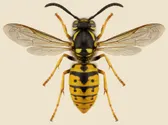
Usually lacks the continuous yellow ring around each eye that most Western yellowjackets show, and instead has black dots or a black line on the face.
Questions
Is the Western yellowjacket dangerous to people?
Take care. Only females can sting, and colonies defend their nests aggressively, especially late in the season.
When can you see the Western yellowjacket?
The Western yellowjacket can be seen from April to November, by day.
Plate retouched from a museum specimen photo by Elyse Guerena, Northern Arizona University, CC0, GBIF Licence
Report a mistake in this entry
Bees, wasps and ants›Wasps and hornets›Vespula
Last updated 2026-09-27. Every entry is checked against published sources.