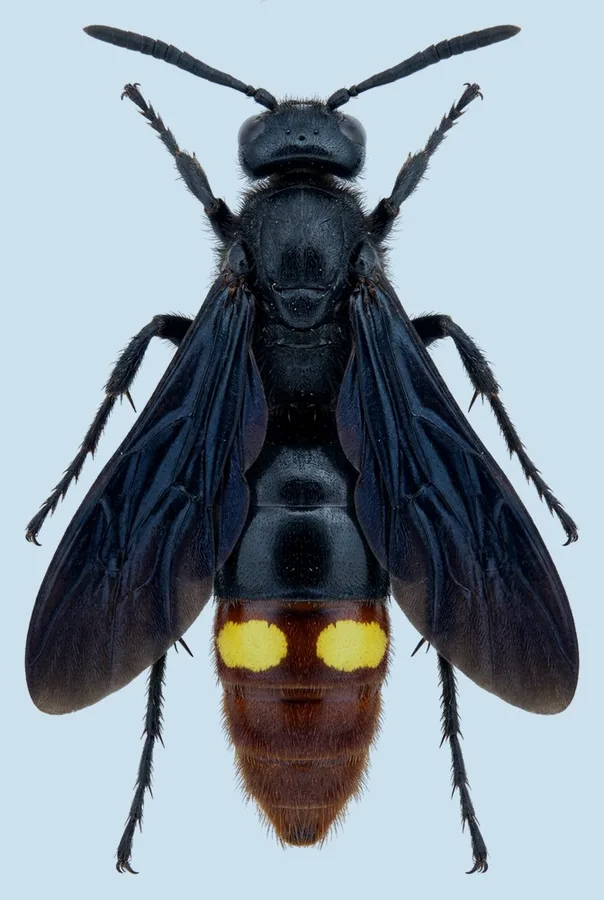
Blue-winged scoliid wasp
Females of this wasp burrow underground to sting and paralyze a beetle grub, then lay a single egg on the helpless victim.
| Where | Lawns, meadows and open fields |
|---|---|
| Size | 20 to 25 mm body length |
| When | August to October |
The blue-winged scoliid wasp is a stocky, 20 to 25 mm wasp with a shiny blue-black head and thorax and a fuzzy, rust-orange patch crossed by two yellow spots on the abdomen. In certain light the black wings show a distinct blue sheen, which gives the species its common name.
Females dig through soil to find beetle grubs such as green June beetle larvae, sting and paralyze one, then lay a single egg on it before the larva consumes the grub and pupates underground. Adults also visit goldenrod and other late season flowers from August into October.
Traits
Habitat
Grassland
Colour
Black, Orange, Yellow
Active
Day
To people
Mild
Females can sting if handled, but this wasp is not aggressive and rarely bothers people.
Activity through the year
Often confused with
Carries two clean cream-white bands across the abdomen instead of the Blue-winged scoliid wasp's single rust-orange patch marked with two yellow spots.
Questions
Is the Blue-winged scoliid wasp dangerous to people?
Mild. Females can sting if handled, but this wasp is not aggressive and rarely bothers people.
When can you see the Blue-winged scoliid wasp?
The Blue-winged scoliid wasp can be seen from August to October, by day.
Plate retouched from a photo by Philip Curley, CC BY 4.0, iNaturalist Licence
Report a mistake in this entry
Bees, wasps and ants›Scoliid wasps›Scolia
Last updated 2026-09-27. Every entry is checked against published sources.