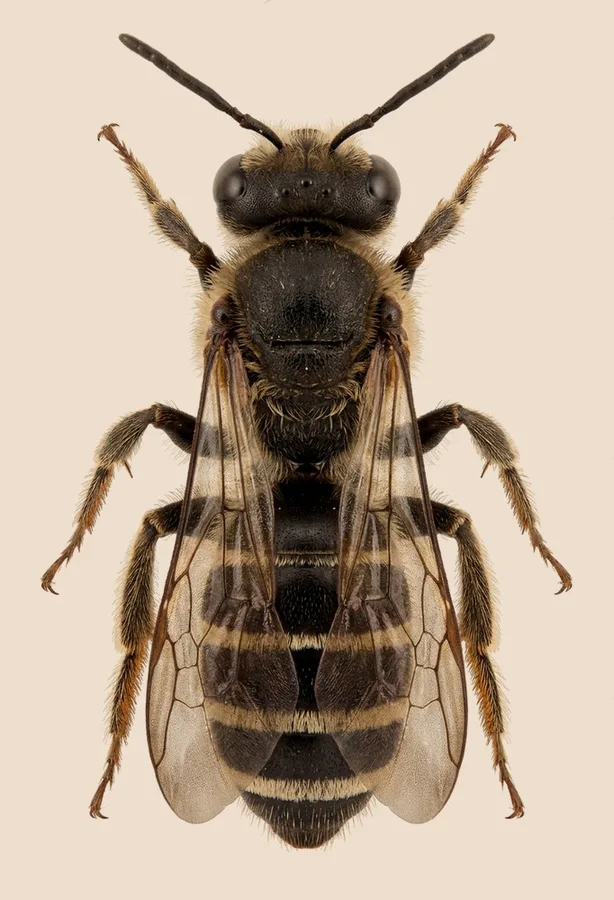
Ligated furrow bee
The Ligated furrow bee digs nest tunnels in bare, sunny, sandy soil and stocks them mainly with pollen from daisies, asters and goldenrods.
| Where | Sunny, sandy soil across North America |
|---|---|
| Size | 7 to 12 mm body length |
| When | April to October |
The Ligated furrow bee is a black, moderately robust sweat bee with pale hair bands across the abdomen and, in females, an enlarged head with a small spine at the lower rear corner of the cheek. Males add yellow on the face and front legs, with orange shading on the underside of the antennae.
Females dig their nest tunnels into bare or sparsely vegetated, well drained soil, often in sandy ground, and are less common where soil is heavy clay. The species is active from spring through fall and ranges across most of the United States and southern Canada.
Traits
Habitat
Garden
Colour
Black
Active
Day
To people
Mild
Visits skin for salt and moisture rather than to feed on blood; docile, but females can give a mild sting if pressed or swatted.
Activity through the year
Often confused with
The orange-legged furrow bee has reddish orange legs and a slender head without a cheek spine, while the Ligated furrow bee has plain dark legs and females carry a small spine at the lower rear corner of the enlarged cheek.
Questions
Is the Ligated furrow bee dangerous to people?
Mild. Visits skin for salt and moisture rather than to feed on blood; docile, but females can give a mild sting if pressed or swatted.
When can you see the Ligated furrow bee?
The Ligated furrow bee can be seen from April to October, by day.
Plate retouched from a photo by Colin Croft, CC BY 4.0, iNaturalist Licence
Report a mistake in this entry
Bees, wasps and ants›Sweat bees›Halictus
Last updated 2026-09-26. Every entry is checked against published sources.