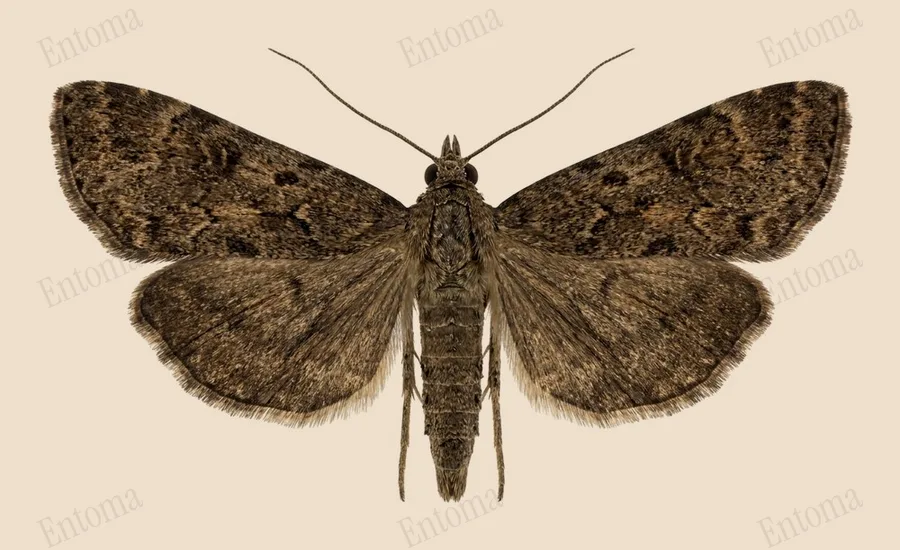
Lucerne moth
This moth's larvae feed on both farm forage crops and wild plants, sheltering under silk webbing tied over low vegetation.
| Where | Fields, pastures and roadsides |
|---|---|
| Size | 24 to 35 mm wingspan |
| When | March to October |
The Lucerne moth is a slim, grayish tan moth with two dark oval spots side by side at the center of the forewing and a two-lobed dark spot nearer the tip. At rest it holds its narrow wings tightly folded along the body.
Caterpillars feed on grasses, clover, alfalfa and smartweed among other low growing plants, sheltering under loose silk webbing. Adults come readily to lights and fly from spring until the first hard freezes of autumn.
Traits
Habitat
Farmland
Colour
Brown, Grey
Active
Night
To people
Attracted to light; harmless to people, though caterpillars can damage alfalfa and clover crops.
Activity through the year
Often confused with
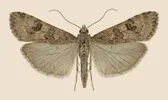
Similar in size, but the Rush veneer shows a whitish hindwing crossed with visible brown veins, where the Lucerne moth's hindwing is plain and unmarked.
Questions
Is the Lucerne moth dangerous to people?
Attracted to light; harmless to people, though caterpillars can damage alfalfa and clover crops.
When can you see the Lucerne moth?
The Lucerne moth can be seen from March to October, at night.
Plate retouched from a photo by sgalick, CC0, iNaturalist Licence
Report a mistake in this entry
Butterflies and moths›Grass moths›Nomophila
Last updated 2026-09-27. Every entry is checked against published sources.