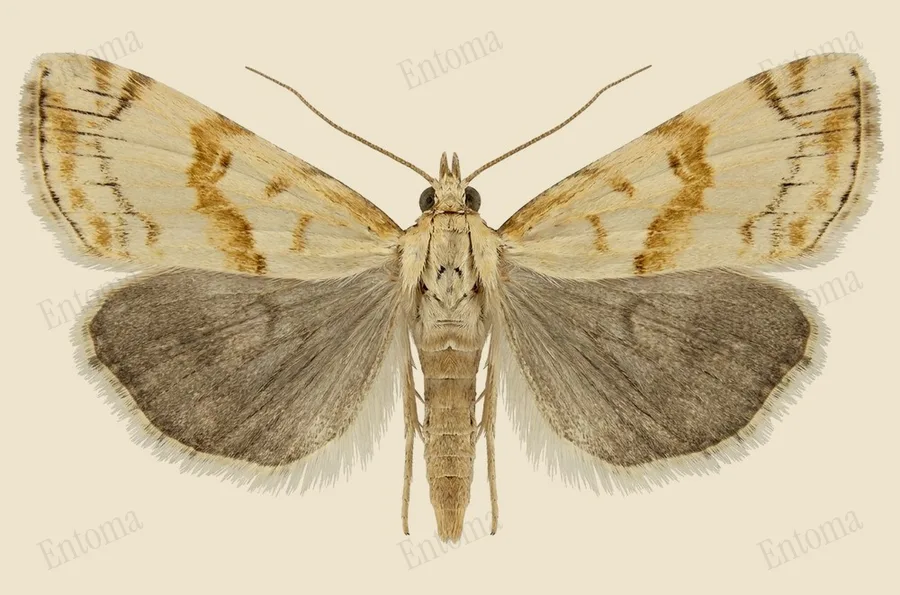
Elegant grass-veneer
Common and widespread across North America, this tiny moth's caterpillars build silk shelters at the base of grass blades and overwinter there only partly grown.
| Where | Grassy fields, meadows and lawns |
|---|---|
| Size | 12 to 15 mm wingspan |
| When | May to September |
The forewings are silvery white shaded with brown and marked with a pale horseshoe-shaped mark visible when the wings are folded; the hindwings are brownish gray with a light fringe. At rest the wings roll into a narrow tube rather than lying flat. Wingspan runs from about 12 to 15 mm.
Caterpillars feed on grass blades and spin silk shelters near the base of the plant, overwintering there only partly grown before finishing development the following spring. Adults come readily to lights at night and are among the most common grass-veneer moths in North America.
Traits
Habitat
Grassland
Colour
White, Grey, Brown
Active
Night
To people
Rests among grass blades by day and comes to lights at night; presents no known risk to people.
Activity through the year
Often confused with
The gold-stripe grass-veneer, as its name suggests, shows a yellow-gold stripe along the forewing rather than the elegant grass-veneer's brown-shaded, mask-patterned forewing.
Questions
Is the Elegant grass-veneer dangerous to people?
Rests among grass blades by day and comes to lights at night; presents no known risk to people.
When can you see the Elegant grass-veneer?
The Elegant grass-veneer can be seen from May to September, at night.
Plate retouched from a museum specimen photo by Mississippi Entomological Museum, CC0, GBIF Licence
Report a mistake in this entry
Butterflies and moths›Grass moths›Microcrambus
Last updated 2026-09-26. Every entry is checked against published sources.