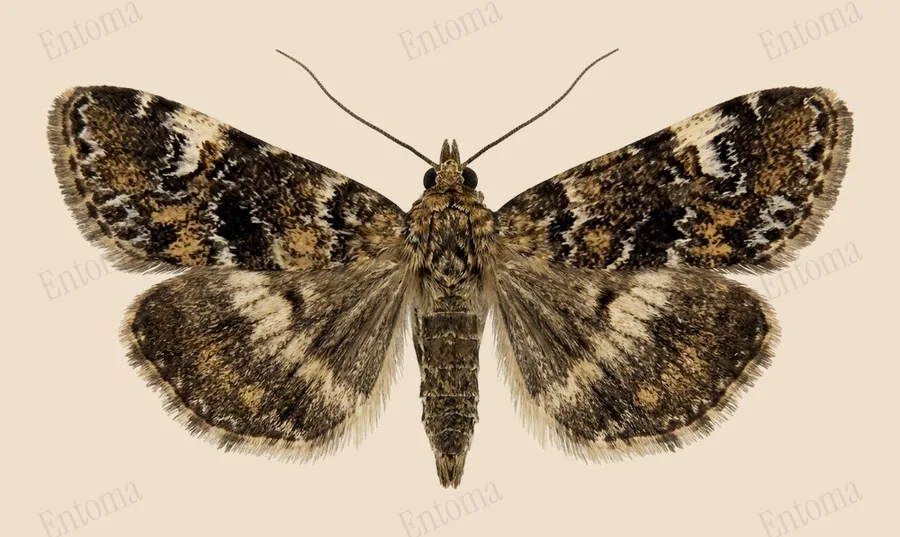
Waterlily leafcutter moth
Its caterpillars live underwater in silk cases built from clipped leaf pieces, breathing through gills as they feed on waterlilies and duckweed.
| Where | Ponds, lakes and slow streams |
|---|---|
| Size | 10 to 22 mm wingspan |
| When | March to October |
Males and females look quite different: males have a wingspan of about 10 to 13 mm and are almost blackish with small white spots on the forewings, while females are larger, up to 22 mm across, and paler tan with softer brown markings.
Caterpillars live submerged among waterlilies, pondweed and duckweed, cutting oval cases from leaves to shelter in while they feed, and they breathe using filamentous gills rather than surfacing for air.
Traits
Habitat
Wetland
Colour
Brown, Grey, White
Active
Night
To people
Harmless to people; the adults do not bite or sting.
Activity through the year
Often confused with
More brightly marked than the Waterlily Leafcutter Moth, with yellowish-orange and white or brownish tones on the wings rather than an even grayish-brown.
Questions
Is the Waterlily leafcutter moth dangerous to people?
Harmless to people; the adults do not bite or sting.
When can you see the Waterlily leafcutter moth?
The Waterlily leafcutter moth can be seen from March to October, at night.
Plate retouched from a photo by Alexis Smith, CC BY 4.0, iNaturalist Licence
Report a mistake in this entry
Butterflies and moths›Grass moths›Elophila
Last updated 2026-09-27. Every entry is checked against published sources.