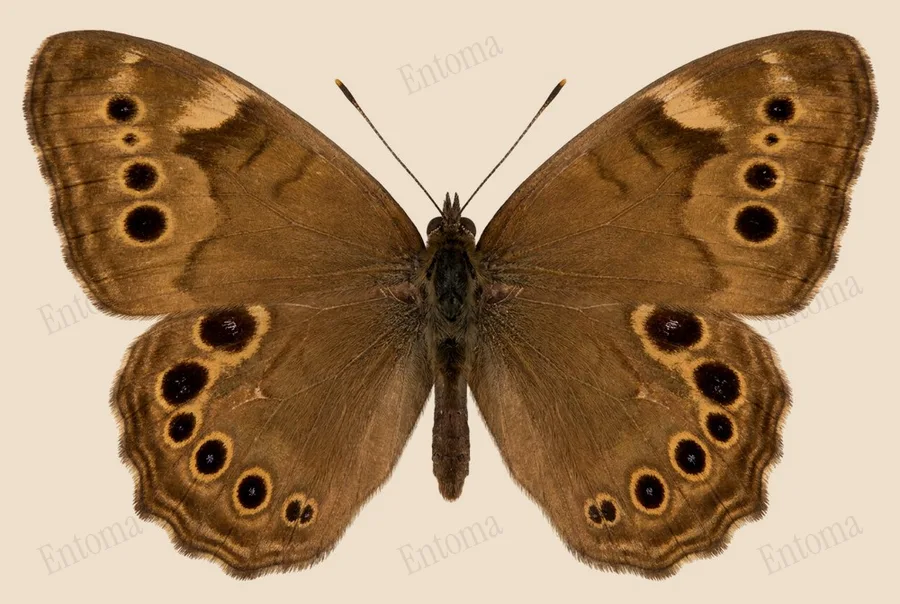
Northern pearly-eye
Adults never sip flower nectar; their short proboscis instead draws fluid from tree sap, rotting fruit, fungi and even animal dung in shaded woodland understory.
| Where | Shaded woodlands with grassy understory |
|---|---|
| Size | 38 to 67 mm wingspan |
| When | May to September |
The northern pearly-eye is grayish brown with antennal clubs that are black at the base and orange tipped. On the forewing underside four eyespots line up in a straight row above an undulating dark line, while the hindwing carries about six smaller spots.
Two broods fly each year, one from late May into June and a second from late July into September. Caterpillars are yellowish green with fine white tubercles and paired reddish horns, feeding at night on woodland grasses such as bottlebrush grass and river oats.
Traits
Habitat
Woodland
Colour
Brown, Grey, Orange
Active
Day
To people
Rests head down on tree trunks near woodland clearings and poses no risk to people.
Activity through the year
Often confused with
The little wood satyr is smaller and shows two large eyespots on each of its four wings, while the northern pearly-eye's forewing underside carries four small eyespots aligned in a straight row.
Questions
Is the Northern pearly-eye dangerous to people?
Rests head down on tree trunks near woodland clearings and poses no risk to people.
When can you see the Northern pearly-eye?
The Northern pearly-eye can be seen from May to September, by day.
Plate retouched from a photo by davidfbird, CC0, iNaturalist Licence
Report a mistake in this entry
Butterflies and moths›Brush-footed butterflies›Lethe
Last updated 2026-09-26. Every entry is checked against published sources.