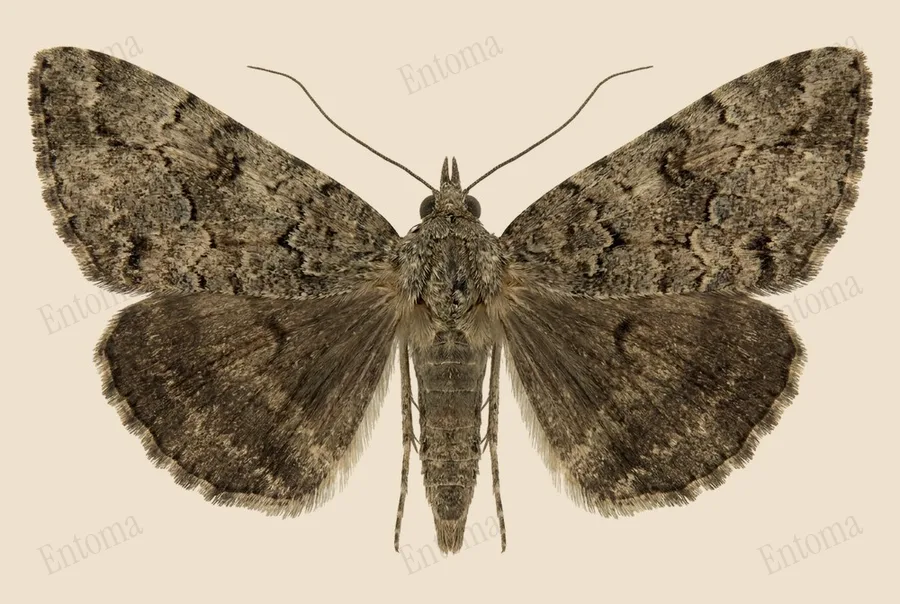
Green cloverworm moth
Green cloverworm caterpillars thrash violently and drop from the plant on a strand of silk the instant they sense a predator nearby.
| Where | Farmland, fields and woodland edges |
|---|---|
| Size | 25 to 35 mm wingspan |
| When | February to December |
Adult green cloverworm moths are mottled brown and grey with a wingspan around 25 to 35 mm, holding their wings in a triangular tent shape at rest. A dark line crosses the middle of each forewing, and long, upturned palps give the face a snouted look, the source of its alternate name black snout moth.
Two or more generations fly each year across the United States and southern Canada, and the caterpillars feed on soybean, alfalfa and other legumes as well as many weeds. They spend the winter as a pupa or adult hidden in leaf litter near the ground.
Traits
Habitat
Farmland
Colour
Brown, Grey
Active
Night
To people
Attracted to lights at night; harmless to handle, though the caterpillars are a common soybean pest.
Activity through the year
Often confused with
Shows a single round dark spot at the center of each forewing rather than the thin dark line that crosses the green cloverworm moth's wings.
Questions
Is the Green cloverworm moth dangerous to people?
Attracted to lights at night; harmless to handle, though the caterpillars are a common soybean pest.
When can you see the Green cloverworm moth?
The Green cloverworm moth can be seen from February to December, at night.
Plate retouched from a museum specimen photo by Chuck Harp, Colorado State University, C.P. Gillette Museum of Arthropod Diversity, CC0, GBIF Licence
Report a mistake in this entry
Butterflies and moths›Erebid moths›Hypena
Last updated 2026-09-26. Every entry is checked against published sources.