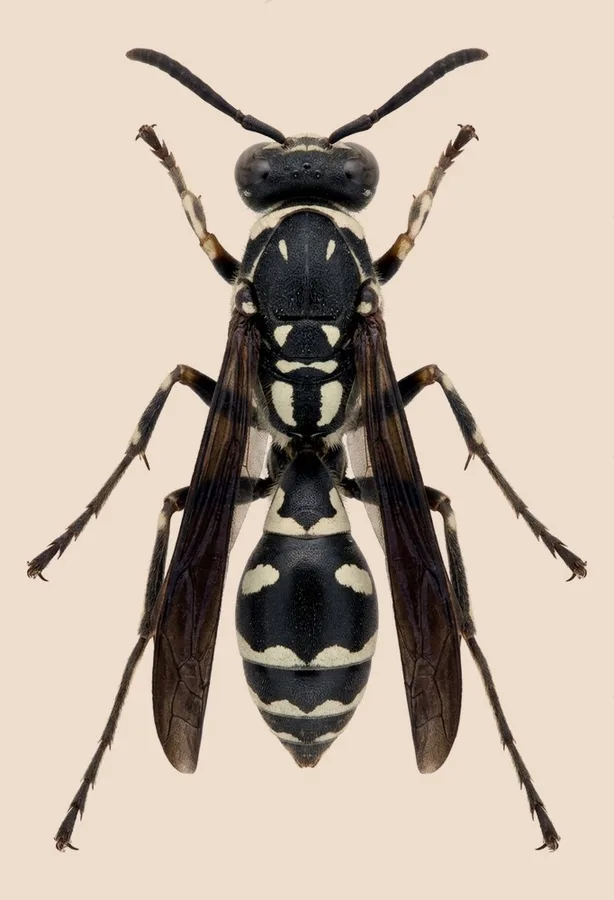
Fraternal potter wasp
This solitary wasp builds a tiny mud pot for each egg, stocking it with paralyzed caterpillars before sealing it, and never returns to guard the nest.
| Where | Woodland edges, shrubby fields and gardens |
|---|---|
| Size | 9 to 19 mm long (body length) |
| When | April to November |
The Fraternal potter wasp is a slender black wasp, 9 to 19 mm long, with ivory markings on the face, thorax and abdomen and wings tinted metallic blue-brown. Females build small, jug-shaped nests of mud on twigs and branches.
Each mud pot holds a single egg suspended on a thread, along with several paralyzed caterpillars that the larva eats as it grows. Females are not aggressive and do not guard their nests, though they can sting if handled roughly.
Traits
Habitat
Woodland
Colour
Black, White
Active
Day
To people
Mild
Females can sting if handled, but this solitary wasp is not aggressive and rarely bothers people.
Activity through the year
Often confused with
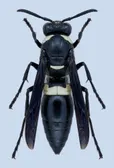
Similar in size and also builds mud nests, but has bold white bands across the waist and shoulders instead of the Fraternal potter wasp's scattered ivory spots on an otherwise black body.
Questions
Is the Fraternal potter wasp dangerous to people?
Mild. Females can sting if handled, but this solitary wasp is not aggressive and rarely bothers people.
When can you see the Fraternal potter wasp?
The Fraternal potter wasp can be seen from April to November, by day.
Plate retouched from a photo by Sam Kieschnick, CC BY 4.0, iNaturalist Licence
Report a mistake in this entry
Bees, wasps and ants›Wasps and hornets›Eumenes
Last updated 2026-09-27. Every entry is checked against published sources.