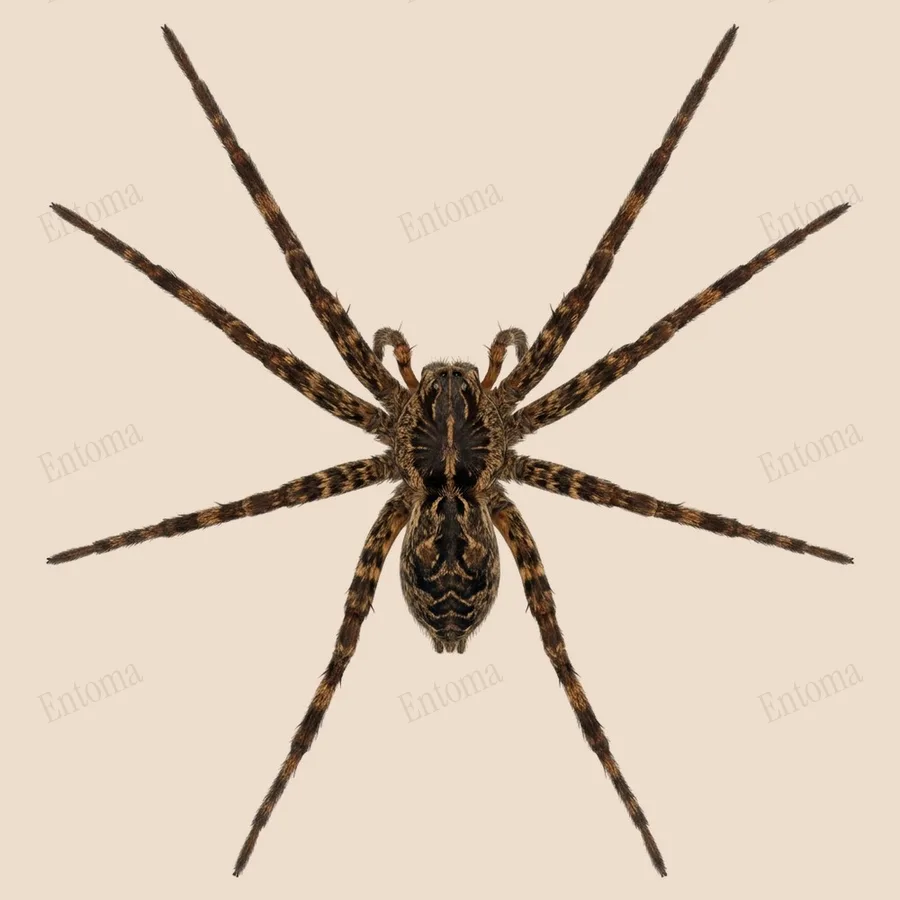
Striped fishing spider
This fishing spider can lift its abdomen like a sail to glide across still water, and feels for prey through ripples with its outstretched front legs.
| Where | Streams, ponds and swamp edges |
|---|---|
| Size | Female 17.5 to 24 mm, male 13 to 16 mm body length |
| When | April to October |
The striped fishing spider is dark brown to grayish, with a wide pale stripe along each side of the body and a series of dark, W-shaped marks outlined in white running down the abdomen. A single pale line runs down the center of the carapace.
It hunts at the edge of streams, ponds and swamps, resting with its front legs on the water film to detect vibrations from prey, then dashing across the surface or diving beneath it. Found across the United States and southern Canada east of the Rocky Mountains, adults mature through the warmer months and are most often seen from spring into autumn.
Traits
Habitat
Wetland
Colour
Brown, White, Grey
Active
Day and night
To people
This fishing spider is not known to bite people and is quick to retreat toward the water if disturbed, so it is best simply left alone near the shoreline.
Activity through the year
Often confused with
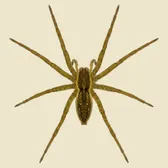
Shows two rows of small white spots on the abdomen and six large black spots between the leg bases underneath, rather than the dark, white-edged W-shaped bands of the striped fishing spider.
Questions
Is the Striped fishing spider dangerous to people?
This fishing spider is not known to bite people and is quick to retreat toward the water if disturbed, so it is best simply left alone near the shoreline.
When can you see the Striped fishing spider?
The Striped fishing spider can be seen from April to October, by day and at night.
Plate retouched from a photo by Ryan Goodman, CC BY 4.0, iNaturalist Licence
Report a mistake in this entry
Spiders›Nursery web spiders›Dolomedes
Last updated 2026-09-27. Every entry is checked against published sources.