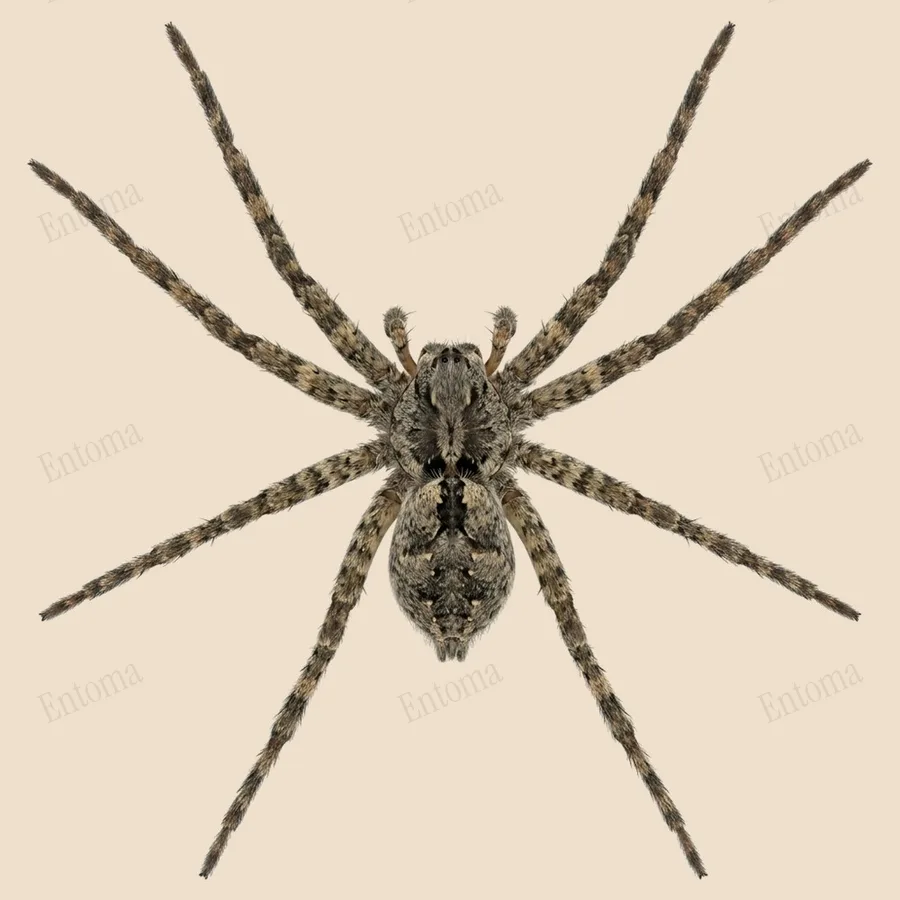
White-banded fishing spider
This fishing spider ranges from mottled grey to mossy green, but a narrow white band just below its eyes identifies it even in the shaded cypress swamps where it hunts.
| Where | Cypress swamps and river edges |
|---|---|
| Size | Female about 23 mm, male about 18 mm body length |
| When | February to November |
The white-banded fishing spider is a large, long-legged spider whose color varies from mottled gray to mossy green, always marked by a narrow pale band just below the eyes. Females are larger than males, and both blend well against tree bark and stone near water.
It hunts from perches on tree trunks, pilings or streamside vegetation, dashing onto the water surface to grab insects, tadpoles and other small prey before retreating to a dry perch to rest. It favors cypress swamps, river edges and other still or slow water across the southern and eastern United States, with adults most often seen from late winter through autumn.
Traits
Habitat
Wetland
Colour
Grey, Green, Brown
Active
Day and night
To people
This large spider is not known to bite people and is best left undisturbed near the water's edge, where it feeds on insects and small aquatic animals.
Activity through the year
Often confused with
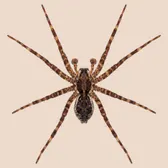
Larger and dark brown to gray with bold pale chevron markings across the body, usually found on tree trunks well away from water, without the pale band below the eyes that marks the white-banded fishing spider.
Questions
Is the White-banded fishing spider dangerous to people?
This large spider is not known to bite people and is best left undisturbed near the water's edge, where it feeds on insects and small aquatic animals.
When can you see the White-banded fishing spider?
The White-banded fishing spider can be seen from February to November, by day and at night.
Plate retouched from a photo by Alan Rockefeller, CC BY 4.0, iNaturalist Licence
Report a mistake in this entry
Spiders›Nursery web spiders›Dolomedes
Last updated 2026-09-27. Every entry is checked against published sources.